THAT ENGLISH TEACHER
  • Home
  • Class Blogs
    • English IV Class Blog Period A
    • English IV Class Blog Period B
    • AP Literature Class Blog Periods C&F
    • RTPOPC Class Blog Period E
  • Contact Me
    • About Me...

AP Literature and Composition Blog

Adam, Satan, or Something Else? Reading 3: Volume Two, pages 71–125

10/22/2026

51 Comments

 
Picture
“Did I request thee, Maker, from my clay
To mould me man? Did I solicit thee
From darkness to promote me?”
----John Milton, Paradise Lost, Book X, lines 743–745

In Paradise Lost, Adam questions his creator about an existence he did not choose. Shelley places these lines at the beginning of Frankenstein, inviting readers to consider the relationship between a creator and a created being.

When the creature reads Milton’s poem, he uses its characters to understand himself. He explains, “Like Adam, I was created apparently united by no link to any other being in existence,” but recognizes that Adam received care and companionship that he has been denied (Shelley 107). He also identifies with Satan: “Many times I considered Satan as the fitter emblem of my condition,” particularly when others’ happiness awakens his envy (Shelley 107).

Does the creature resemble Adam, Satan, or a complicated combination of both, and what does this comparison reveal about how he understands his identity and responsibility for his actions?

Develop an interpretation that closely examines Shelley’s language and uses one annotation from pages 71–125 to deepen, complicate, or challenge your reading.

You might consider:
  • What does identifying with Adam suggest about what the creature believes Victor owes him?
  • What does identifying with Satan reveal about his envy, exclusion, or desire for revenge?
  • Does the creature use these comparisons to understand his experiences, justify his actions, or both?
  • Where does the comparison become imperfect? How is the creature’s situation different from either character’s?
You do not need to answer every question. Use the questions that help you develop a focused argument.

Treat the annotation as another voice in the conversation. You may agree with its interpretation, qualify it, or question it using evidence from the novel. Critically examine the creature’s account, Victor’s narration, and the annotation contributors’ interpretations. Explaining the creature’s suffering does not automatically settle the question of his responsibility for harming others.

Primary Blog Post: 300 - 400 words, due Monday, Oct 26th by 11:59 PM
Your post should:
  • Present a clear, defensible interpretation that answers the central question.
  • Analyze at least two brief quotations or specific textual details from Shelley’s novel, using proper MLA citations.
  • Engage with one annotation, identifying its contributor, note number, and page number.
  • Explain how that annotation changes or extends your understanding of a specific passage.
  • Use thoughtful, organized writing with minimal errors in grammar and usage.

Distinguish between the novelist and the annotation’s contributor: “Shelley describes…” and “In annotation ___, [contributor’s name] argues…”
Before drafting, consider: What did I notice initially? What did the annotation help me notice? What do I now understand differently?

Use your assigned nom de plume and include your word count.

Suggested Annotations: These annotations offer possible starting points. You are not restricted to this list. The questions below are reading guides rather than direct quotations from the notes:
  • Note 12, p. 81 - Annalee Newitz: Newitz examines how rejection shapes the creature’s identity and reminds readers that his account reaches us through Victor and Walton. How might this narrative framing complicate our judgment of his identification with Adam or Satan?
  • Note 25, p. 99 - Stephanie Naufel: Naufel argues that identity develops through relationships and emphasizes the creature’s namelessness. Does identifying with Adam or Satan help the creature define himself when he has no family, community, or name?
  • Note 28, p. 105 - Sean A. Hays: Hays explores how observing others shapes the creature and questions whether his admiration of the De Laceys partly reflects his desire for a loving family. How might that longing influence the comparisons he draws between himself and Milton’s characters?
  • Note 29, p. 105 - Ed Finn: Finn considers the creature’s books as a literary education and describes Milton’s Satan as a charismatic figure who challenges his creator. How does reading Paradise Lost give the creature language for both his suffering and his resistance? Focus on Finn’s interpretation of the books rather than the note’s opening claim about Shelley’s reading timeline.
  • Note 32, pp. 109-110 - Douglas Kelley: Kelley emphasizes the importance of connection and argues that Victor provides biological life without the relationships necessary for wellbeing. How does this distinction deepen the creature’s comparison between his abandonment and Adam’s care?
  • Note 36, p. 120 - David H. Guston: Guston questions the creature’s assumption that a female companion would necessarily satisfy his needs. How might the creature’s desire for an “Eve” complicate our sympathy for him or reveal expectations resembling Victor’s own?

Secondary Blog Responses: Two responses, 100 - 150 words each, due Friday, October 30th by 11:59 PM
Read everyone’s primary posts, then select two that invite further discussion.
  • Response 1 - Connect interpretations:
Respond to a classmate who used a different annotation. Explain what their annotation helped you notice and how it connects to or complicates your interpretation of the creature’s identity, suffering, or responsibility.
  • Response 2 - Extend or challenge:
Offer a specific passage or alternative interpretation that develops or respectfully challenges another classmate’s argument. Explain how your evidence adds to the discussion.

Go beyond agreement or praise: engage with your classmates’ reasoning and help move the conversation forward.
Use your assigned nom de plume, write with minimal errors in grammar and usage, and include a word count for each response.

Extra Information: If you are unfamiliar with Paradise Lost by John Milton, Dr Moore of Saint Thomas University gives an excellent and relatively brief overview considering the complexity of this famous poem. As always, remember that this video lecture is Dr Moore's interpretation of Milton's epic classic through the lens of sociopolitical thought. You may find that you have your own interpretation if you choose to read it.

Summary (adapted from GreatBooksProf): Paradise Lost, an epic poem by John Milton, is arguably one of the greatest poems written in the English language. It is based upon the creation story found in the Christian Bible. Most religions (current and ancient) have stories that attempt to answer the question: Where did we come from? Interestingly, if you take a Comparative Studies course, you may find many parallels amongst various societies throughout time and place. This is where thinkers like Joseph Campbell developed the concept for his book, The Hero with a Thousand Faces, and Carl Jung's Archetypal Characters. What is Paradise Lost about? Paradise Lost tells the story of the Garden of Eden, God's creation of humanity, Eve's temptation by Satan and Adam's subsequent temptation by Eve. It also tells the story of the War in Heaven, when Satan rebelled against God and fell to Hell. Paradise Lost is an extraordinary epic poem; its major themes include freedom, knowledge, justice, providence, republicanism (lower case "r") and monarchy. This podcast provides a summary of some of Paradise Lost's major themes as well as some strategies for reading Milton's epic poem.
51 Comments

Discussion Question (Reading 2)- Creating Life: Where Does Responsibility Begin? - Primary and Secondary Blog Entries

10/18/2026

 
Picture
Reading: Frankenstein, MIT annotated edition, printed pages 16-69.

Victor devotes himself to bringing a new being into the world. Shelley describes his work through language associated with physical suffering, labor, and parenthood. Yet his anticipation of creating life differs sharply from his response when that life begins.

What does this tension reveal about Victor’s understanding of creation and his responsibilities as a creator?

Develop an interpretation that closely examines Shelley’s language and uses one annotation from pages 16-69 to deepen, complicate, or challenge your reading. Consider the associations with pregnancy, childbirth, or parenthood that Shelley’s descriptions invite. What does Victor expect from his creation, and what does he appear prepared (or unprepared) to give in return?

Treat the annotation as another voice in the conversation. You may agree with its interpretation, qualify it, or question it using evidence from the novel. An important distinction throughout: Shelley’s characters offer competing accounts of their experiences, and the annotation contributors offer their interpretations of those accounts. Neither a narrator’s judgment nor a footnote should automatically become the reader’s final conclusion. In other words, feel free to disagree, but be prepared to defend your position with textual evidence and reasoning!

Primary Blog Post: 300-400 Words, due by Tuesday, 11:59 PM.
Your post should:
  • Present a clear, defensible interpretation that answers the central question.
  • Analyze at least two brief quotations or specific textual details from Shelley’s novel (use proper MLA citation).
  • Engage with one annotation, identifying its contributor, note number, and page number.
  • Explain how that annotation changes or extends your understanding of a specific passage.
  • Use thoughtful, organized writing with minimal errors in grammar and usage.
Distinguish between the novelist and the annotation’s contributor: “Shelley describes…” and “In annotation ___, [contributor’s name] argues…”
Before drafting, consider: What did I notice initially? What did the annotation help me notice? What do I now understand differently?
Use your assigned nom de plume and include your word count.

***For this first discussion blog using annotations from the text, I am providing you with a few suggested annotations that you might find helpful. You are by NO MEANS restricted to these annotations:
  • Note 38, p. 36 - Dominic Berry: Does creating something establish ownership over it? How does that question change when the creation is a person or child?
  • Note 40, p. 37 - Melissa Wilson Sayres: How does Victor’s pride in his achievement complicate his expectations of gratitude and control?
  • Note 43, pp. 38–39 - Joey Eschrich: How might Victor’s isolation affect both his creative process and his ability to provide a social world for his creation?
  • Note 48, p. 41 - Joel Gereboff: Should readers accept Victor’s emotional revulsion as a sound judgment of the creature?
  • Note 49, pp. 42–43 - Stephani Etheridge Woodson: What happens when a creator judges the value of a living being through its appearance?

Secondary Blog Responses: Two Responses, 100–150 Words each, due by Friday, 11:59 PM
Read everyone’s primary posts, then select two that invite further discussion.
  • Response 1 - Connect interpretations:
Respond to a classmate who used a different annotation. Explain what their footnote helped you understand and how it connects to your own ideas about Victor’s responsibility.
  • Response 2 - Extend or challenge:
Offer a specific passage or alternative interpretation that develops or respectfully challenges another classmate’s argument. Explain how your evidence adds to the discussion.

Go beyond agreement or praise: engage with your classmates’ reasoning and help move the conversation forward.
Use your assigned nom de plume, write with minimal errors in grammar and usage, and include a word count for each response.

Frankenstein: Letters 1-4 Primary Blog Post only! (Click on this title to see comments on your Primary Blog Posts)

10/9/2026

 
Picture
The painting above depicts a fate that Walden fears but is willing to face, risking the lives of his crew, in order to fulfill his all-consuming pursuit of fame's immortality.

After having read these initial letters from the ship's captain to his sister, select a single passage (this may be a single paragraph or several) that you feel best typifies the action AND Shelley's authorial intent in this section of Frankenstein. Explain the action and context of the quoted passage (you must cite the passage) and then explain how your understanding of this passage supports your understanding, deepens the character development, and/or builds a central message that aligns with one of the unit's essential questions.

Your blog post must be 250 - 300 words, with minimal errors in grammar and usage, and thoughtful and thorough writing. Please use the 19th-century scientist selected in class as your nom de plume. This Primary Blog Response should be completed by 11:59 PM on Monday. Have a great weekend!

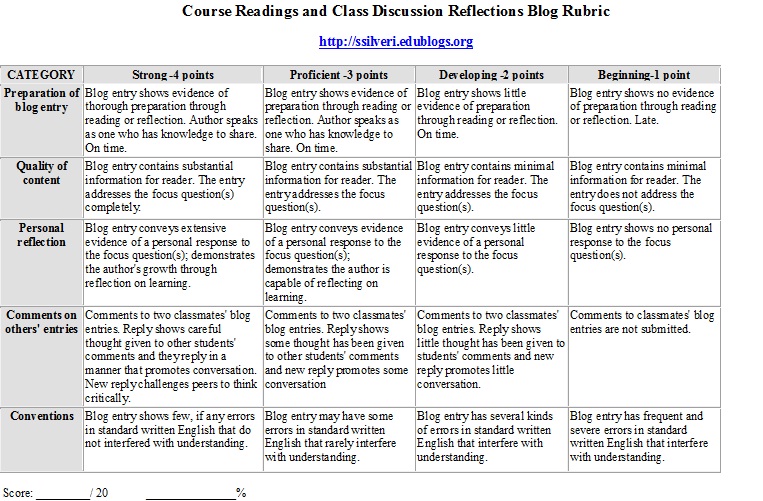
    Blog Post Rubric

    Picture

    Archives

    November 2026
    October 2026
    April 2026
    March 2026
    February 2026
    January 2026
    December 2025
    November 2025
    March 2025
    February 2025
    January 2025
    February 2023
    November 2022
    October 2022
    January 2021
    December 2020
    November 2020
    March 2020
    February 2020
    January 2020
    November 2019
    October 2019
    September 2019
    March 2019
    February 2019
    January 2019
    December 2018
    November 2018
    October 2018
    September 2018
    April 2018
    March 2018
    January 2018
    December 2017
    November 2017
    October 2017
    March 2017
    February 2017
    January 2017
    December 2016
    November 2016
    October 2016
    September 2016
    November 2015
    October 2015
    September 2015
    March 2015
    February 2015
    April 2014
    March 2014

    Categories

    All
    A Doll's House
    Adrienne Rich
    Afghanistan
    Albert Rios
    Anton Chekhov
    As I Lay Dying
    A Thousand Splendid Suns
    Barbara Kingsolver
    Biology
    Charlotte Bronte
    Chemistry
    Class Division
    Community
    Congo/Zaire
    Contrasts
    Cormac McCarthy
    Critical Lens
    Cross Cultural Misconceptions
    Cross-Cultural Misconceptions
    Danusha Laméris
    Denise Duhamel
    Dystopia
    Ethics
    Family
    Frankenstein
    Gateshead
    Gender Roles
    Gender Study
    Hamlet
    Henrik Ibsen
    Henry Wadsworth Longfellow
    Hesitation
    Hope And Despair
    Hubris
    Humanity
    Identity
    Imagery
    Imagination
    Independent Reading
    Invention
    Jane Eyre
    John Donne
    Joy Harjo
    Khaled Hosseini
    Literary Analysis
    Literature
    March Madness
    Margaret Atwood
    Maryann Corbett
    Mary Shelley
    Morality
    Naomi Shihab Nye
    Objectivity V. Subjectivity
    Pablo Neruda
    Paradise Lost
    Parent Child Relationships
    Parent-Child Relationships
    Perseverance
    Perspective
    Phillis Wheatley
    Pleasure Reading
    Poetry
    Psychology
    Radiolab
    Ralph Waldo Emerson
    Reading
    Relationships
    Religion
    Right Vs. Wrong
    Rita Dove
    Ritual
    Rudy Francisco
    Samuel Taylor Coleridge
    Sanity
    Science
    Shelter
    Soliloquy
    Suspense
    Symbolism
    Tennyson
    The Handmaid's Tale
    The Lady With The Little Dog
    The Poisonwood Bible
    The Rime Of The Ancient Mariner
    The Road
    Tracy K. Smith
    Ulysses
    Victor Hernandez Cruz
    Virtual Poetry Unit
    Week 1 Poetry Activity
    William Faulkner
    Women's Roles

    RSS Feed

  • Home
  • Class Blogs
    • English IV Class Blog Period A
    • English IV Class Blog Period B
    • AP Literature Class Blog Periods C&F
    • RTPOPC Class Blog Period E
  • Contact Me
    • About Me...