|
Please compose one thoughtful paragraph responding to the following: Read the lyrics while listening to Radiohead’s “There There,” from the 2003 album Hail to the Thief. Consider the song alongside the reference to Gertrude Stein’s statement, “There is no there there,” in Dene’s chapter. How do these two allusions deepen or complicate your understanding of place and belonging in Tommy Orange’s There There? Refer to a specific detail from the song and a moment in your reading so far. Consider how a place can remain physically present while someone’s sense of connection to it changes. “There There” Radiohead (2003) In pitch dark I go walking in your landscape Broken branches Trip me as I speak Just 'cause you feel it Doesn't mean it's there Just 'cause you feel it Doesn't mean it's there There's always a siren Singing you to shipwreck (Don't reach out, don't reach out) (Don't reach out, don't reach out) Steer away from these rocks We'd be a walking disaster (Don't reach out, don't reach out) (Don't reach out, don't reach out) Just 'cause you feel it Doesn't mean it's there (Someone on your shoulder) (Someone on your shoulder) Just 'cause you feel it Doesn't mean it's there (Someone on your shoulder) (Someone on your shoulder) There, there Why so green And lonely, and lonely And lonely Heaven sent you To me, to me To me We are accidents Waiting, waiting To happen We are accidents Waiting, waiting To happen Please complete by Friday BEFORE class. Use your NEW Nom de PLume.
0 Comments
 R.C. Gorman (Dine), Navajo Velvet, giclee, 23 x 33. After reading the Prologue and Interlude of There There, what idea would you like to explore further as we begin meeting the novel’s characters?
Choose one starting point:
Refer to one specific moment in the Interlude that sparked your thinking. Explore your response: what surprised you, challenged an assumption, reminded you of something, or left you uncertain? You may make a personal connection, but you do not need to share private experiences. End with one question you want to carry into the characters’ stories. This is a space to think through ideas. You do not need a formal thesis or literary-device analysis; thoughtful questions and developing ideas are welcome. Use your NEW nom de plume and add your word count at the end (200-250 words). Post by class time on Monday, November 16th. Reading 4 Blog: When Regret Comes Too Late - Volume Three, pages 126–187 - Primary Blog Entry ONLY11/1/2026  By the end of Frankenstein, Victor, the creature, and Walton must confront what their deepest desires have cost and whether suffering has taught them to see themselves more clearly. Each attempts to explain his choices, yet the distance between his words and actions leaves troubling questions unanswered. Victor condemns the ambition that has devastated his life while still yearning for greatness; the creature mourns the lives he deliberately destroyed; and Walton turns toward home, carrying both the lives he has preserved and the dream he cannot bear to surrender.
How does Shelley use the ending of Frankenstein to develop a complex understanding of responsibility and to challenge the explanations people give for their own actions? Develop an interpretation that closely examines Shelley’s language and uses one annotation from pages 126–187 to deepen, complicate, or challenge your reading. Focus on one character or a comparison between two characters so that you can develop your ideas thoroughly. You might consider:
Choose one central idea. You do not need to answer every question. Explain what Shelley’s treatment of that idea suggests about human behavior beyond the novel. Treat the annotation as another voice in the conversation. You may agree with its interpretation, qualify it, or question it using evidence from the novel. Neither a character’s explanation nor an annotation should automatically become your conclusion. Primary Blog Post: 300-400 words, due Tuesday by 11:59 PM Your post should:
Distinguish between the novelist and the annotation’s contributor: “Shelley describes…” and “In annotation ___, [contributor’s name] argues…” Before drafting, consider: What did I believe about this character earlier? What does the ending confirm or complicate? What did the annotation help me notice? Use your assigned nom de plume and include your word count. Suggested Annotations: These annotations offer possible starting points. You are not restricted to this list. The questions below are reading guides rather than direct quotations from the notes.
Remember: The creature announces his intention to destroy himself, but the novel ends before readers can know whether he carries out that intention.  “Did I request thee, Maker, from my clay To mould me man? Did I solicit thee From darkness to promote me?” ----John Milton, Paradise Lost, Book X, lines 743–745 In Paradise Lost, Adam questions his creator about an existence he did not choose. Shelley places these lines at the beginning of Frankenstein, inviting readers to consider the relationship between a creator and a created being. When the creature reads Milton’s poem, he uses its characters to understand himself. He explains, “Like Adam, I was created apparently united by no link to any other being in existence,” but recognizes that Adam received care and companionship that he has been denied (Shelley 107). He also identifies with Satan: “Many times I considered Satan as the fitter emblem of my condition,” particularly when others’ happiness awakens his envy (Shelley 107). Does the creature resemble Adam, Satan, or a complicated combination of both, and what does this comparison reveal about how he understands his identity and responsibility for his actions? Develop an interpretation that closely examines Shelley’s language and uses one annotation from pages 71–125 to deepen, complicate, or challenge your reading. You might consider:
Treat the annotation as another voice in the conversation. You may agree with its interpretation, qualify it, or question it using evidence from the novel. Critically examine the creature’s account, Victor’s narration, and the annotation contributors’ interpretations. Explaining the creature’s suffering does not automatically settle the question of his responsibility for harming others. Primary Blog Post: 300 - 400 words, due Monday, Oct 26th by 11:59 PM Your post should:
Distinguish between the novelist and the annotation’s contributor: “Shelley describes…” and “In annotation ___, [contributor’s name] argues…” Before drafting, consider: What did I notice initially? What did the annotation help me notice? What do I now understand differently? Use your assigned nom de plume and include your word count. Suggested Annotations: These annotations offer possible starting points. You are not restricted to this list. The questions below are reading guides rather than direct quotations from the notes:
Secondary Blog Responses: Two responses, 100 - 150 words each, due Friday, October 30th by 11:59 PM Read everyone’s primary posts, then select two that invite further discussion.
Go beyond agreement or praise: engage with your classmates’ reasoning and help move the conversation forward. Use your assigned nom de plume, write with minimal errors in grammar and usage, and include a word count for each response. Extra Information: If you are unfamiliar with Paradise Lost by John Milton, Dr Moore of Saint Thomas University gives an excellent and relatively brief overview considering the complexity of this famous poem. As always, remember that this video lecture is Dr Moore's interpretation of Milton's epic classic through the lens of sociopolitical thought. You may find that you have your own interpretation if you choose to read it. Summary (adapted from GreatBooksProf): Paradise Lost, an epic poem by John Milton, is arguably one of the greatest poems written in the English language. It is based upon the creation story found in the Christian Bible. Most religions (current and ancient) have stories that attempt to answer the question: Where did we come from? Interestingly, if you take a Comparative Studies course, you may find many parallels amongst various societies throughout time and place. This is where thinkers like Joseph Campbell developed the concept for his book, The Hero with a Thousand Faces, and Carl Jung's Archetypal Characters. What is Paradise Lost about? Paradise Lost tells the story of the Garden of Eden, God's creation of humanity, Eve's temptation by Satan and Adam's subsequent temptation by Eve. It also tells the story of the War in Heaven, when Satan rebelled against God and fell to Hell. Paradise Lost is an extraordinary epic poem; its major themes include freedom, knowledge, justice, providence, republicanism (lower case "r") and monarchy. This podcast provides a summary of some of Paradise Lost's major themes as well as some strategies for reading Milton's epic poem.  Reading: Frankenstein, MIT annotated edition, printed pages 16-69.
Victor devotes himself to bringing a new being into the world. Shelley describes his work through language associated with physical suffering, labor, and parenthood. Yet his anticipation of creating life differs sharply from his response when that life begins. What does this tension reveal about Victor’s understanding of creation and his responsibilities as a creator? Develop an interpretation that closely examines Shelley’s language and uses one annotation from pages 16-69 to deepen, complicate, or challenge your reading. Consider the associations with pregnancy, childbirth, or parenthood that Shelley’s descriptions invite. What does Victor expect from his creation, and what does he appear prepared (or unprepared) to give in return? Treat the annotation as another voice in the conversation. You may agree with its interpretation, qualify it, or question it using evidence from the novel. An important distinction throughout: Shelley’s characters offer competing accounts of their experiences, and the annotation contributors offer their interpretations of those accounts. Neither a narrator’s judgment nor a footnote should automatically become the reader’s final conclusion. In other words, feel free to disagree, but be prepared to defend your position with textual evidence and reasoning! Primary Blog Post: 300-400 Words, due by Tuesday, 11:59 PM. Your post should:
Before drafting, consider: What did I notice initially? What did the annotation help me notice? What do I now understand differently? Use your assigned nom de plume and include your word count. ***For this first discussion blog using annotations from the text, I am providing you with a few suggested annotations that you might find helpful. You are by NO MEANS restricted to these annotations:
Secondary Blog Responses: Two Responses, 100–150 Words each, due by Friday, 11:59 PM Read everyone’s primary posts, then select two that invite further discussion.
Go beyond agreement or praise: engage with your classmates’ reasoning and help move the conversation forward. Use your assigned nom de plume, write with minimal errors in grammar and usage, and include a word count for each response.  The painting above depicts a fate that Walden fears but is willing to face, risking the lives of his crew, in order to fulfill his all-consuming pursuit of fame's immortality.
After having read these initial letters from the ship's captain to his sister, select a single passage (this may be a single paragraph or several) that you feel best typifies the action AND Shelley's authorial intent in this section of Frankenstein. Explain the action and context of the quoted passage (you must cite the passage) and then explain how your understanding of this passage supports your understanding, deepens the character development, and/or builds a central message that aligns with one of the unit's essential questions. Your blog post must be 250 - 300 words, with minimal errors in grammar and usage, and thoughtful and thorough writing. Please use the 19th-century scientist selected in class as your nom de plume. This Primary Blog Response should be completed by 11:59 PM on Monday. Have a great weekend! Please follow the instructions for writing a poetry précis found on Google Classroom. You may use your own name or the pen name you used with The Handmaid's Tale. This is due BEFORE class tomorrow (portal closes at the start of class). March Madness: Round 1 ("Ego," "Remember," "When Giving is All We Have," and "A Psalm of Life")4/8/2026
Please follow the instructions for writing a poetry précis found on Google Classroom. You may use your own name or the pen name you used with The Handmaid's Tale. This is due BEFORE class tomorrow (portal closes at the start of class). Please follow the instructions for writing a poetry précis found on Google Classroom. You may use your own name or the pen name you used with The Handmaid's Tale. This is due BEFORE class tomorrow (portal closes at the start of class). Please follow the instructions for writing a poetry précis found on Google Classroom. You may use your own name or the pen name you used with The Handmaid's Tale. This is due BEFORE class on Monday (portal closes at the start of class).
Please follow the instructions for writing a poetry précis found on Google Classroom. You may use your own name or the pen name you used with The Handmaid's Tale. This is due BEFORE class tomorrow (portal closes at the start of class).Today, we read a selection of two poems and voted on the "best." Clearly, "best" is a very subjective term, and so here is your space to justify your choice. Select your favorite of the poems and compose a BRIEF précis that illuminates the basis of your decision. This FIRST poetry précis is due by THIS Sunday night, but moving forward, these will be due each night that we review poems (only one précis for any of the poems read in a single day). Your poetry precis does not have to be the winning poem of the day. You may select your favorite of any that we cover in a day. Some days, we will read only two poems; others, we may read up to SIX! Please follow the instructions for writing a poetry précis found on Google Classroom. The graphic organizer you used in class will be helpful to you here. You may use your own name or the pen name you used with The Handmaid's Tale.  You’ve just finished The Handmaid’s Tale... And instead of ending with Offred, Atwood gives us a transcript from an academic conference hundreds of years later. Why? Before we write a more formal literary analysis essay, we need to figure out what this ending is really doing. Address the 5 parts below in your primary blog response. This does not need to be formal in style. It’s thinking on paper (blog), and you can be as conversational as you like. You do not need to answer each specific question in your response, but you should use them to guide your literary musing. PART I: First Reaction
PART II: What Do We Notice? 1. How Do the Scholars Talk About Offred?
PART III: The Last Line The chapter ends with “Are there any questions?” Finish your conversation by exploring at least two possible meanings of this line. Consider:
PART IV: Bridging to the Bigger Idea Now push your thinking further. Do you think Atwood is only criticizing these fictional academics, or might she also be saying something about:
PART V: Preparing for the Essay (The Big Move) How does reading Offred’s full story change the way we judge Professor Pieixoto? In a meta-analysis of this chapter, how does examining Pieixoto's lecture force us to reconsider everything we just read? How does it shift the question from “What happened to Offred?” to “How will her story be handled?” and maybe even to “Who controls meaning?” Finally, ask yourself, "What is Atwood's message to me?" Primary Blog Expectations (respond to the prompt above): 200-250 words, minimal errors in grammar and usage, thoughtful and thorough writing. Please use the name you were assigned in class as your nom de plume and be sure to add a word count. Due by 11:59 pm Friday night, 3/6/2026. Secondary Blog Response Expectations (read everyone's primary responses, select two that interest you, and respond to their ideas): 100-150 words EACH, minimal errors in grammar and usage, thoughtful and thorough writing. Please use the name you were assigned in class as your nom de plume and be sure to add a word count. Due by 11:59 pm Sunday night, 3/8/2026.   Jezebel's, as a setting, encapsulates the duality of Gilead: a regime that outwardly enforces strict moral codes but inwardly indulges in depravity and excess. The "masquerade" atmosphere serves as a metaphor for the regime itself-a facade of order masking chaos and corruption. Offred's internal conflict is mirrored in the women around her. Serena Joy serves as her foil; a woman who, despite their class difference, represents the women who see the hypocrisy but have submitted themselves to it. Ofglen is the moral voice of resistance, while Moira's voice serves as a spirit of her past. This fragmented identity is apparent as Offred struggles to reconcile her pre-Gilead self with her current reality. This doubling of identity is further illustrated in her connection to Nick, who represents both a risk and a refuge. This moral ambiguity comes to life in Offred's "particicution" during the Salvaging. While resistance is critical, survival is fundamental, so safety through acquiescence becomes obvious. In your response, you might address any or all of the following prompts:
Secondary Blog Response Expectations (read everyone's primary responses, select two that interest you, and respond to their ideas): 100-150 words EACH, minimal errors in grammar and usage, thoughtful and thorough writing. Please use the name you were assigned in class as your nom de plume and be sure to add a word count. Due by 11:59 pm Sunday night, 3/1/2026.   The action in this week's reading was both notable and contextually rich. We focused on Janine's highly ritualized birthing ceremony, Moira's escape, the Commander's odd games of Scrabble with Offred, contrasted with Offred's reflections on a childhood memory of a documentary about Nazi Germany. In this Primary blog entry, please consider how, in this week's reading, Atwood presents and connects the control and commodification of women in Gilead with the psychological effects of oppression. In your response, you might address any or all of the following prompts:
Secondary Blog Response Expectations (read everyone's primary responses, select two that interest you, and respond to their ideas): 100-150 words EACH, minimal errors in grammar and usage, thoughtful and thorough writing. Please use the name you were assigned in class as your nom de plume and be sure to add a word count. Due by 11:59 pm Sunday night, 2/22/2026.   The list is long of possible topics to discuss in this week's reading. Select one of the topic choices below to discuss how Atwood's use of Narrative Techniques and Imagery to illuminates your understanding of them:
In your response you might address any or all of the following prompts:
Successful responses will:
In your response, use at least a few of the terms below (and apply them correctly):
Primary Blog Expectations (respond to the prompt above): 200-250 words, minimal errors in grammar and usage, thoughtful and thorough writing. Please use the name you were assigned in class as your nom de plume and be sure to add a word count. Due by 11:59 pm Friday night, 2/13/2026. Secondary Blog Response Expectations (read everyone's primary responses, select two that interest you, and respond to their ideas): 100-150 words EACH, minimal errors in grammar and usage, thoughtful and thorough writing. Please use the name you were assigned in class as your nom de plume and be sure to add a word count. Due by 11:59 pm Sunday night, 2/15/2026.   Context: As you read The Handmaid’s Tale, pay attention to two big ideas:
1) World-building (Setting) This isn’t just “where and when.” It’s how the entire society operates: its rules, routines, symbols, and what people are permitted (or not permitted) to do. 2) Narrative Voice This is how the story is told and who is telling it. Offred’s voice shapes what we notice, what we trust, and what we question. These two things work together: the setting shows us what kind of world Gilead is, and Offred’s voice shows us what it feels like to live there. After this week’s reading, you can see that The Handmaid’s Tale blends genres: it’s speculative, realistic, and dystopian. You’re also learning that Gilead’s rise and its religious government controls nearly every part of life in what used to be the United States. Finally, you’re starting to see that Offred is full of contradictions: she is oppressed, but she also finds ways to be resistant. Even when the system tries to erase her identity, she uses memory and storytelling to hold on to her sense of self. This also connects to the difference between “freedom from” (freedom from danger or chaos) and “freedom of” (freedom to choose your own life). Prompt: Write a response about this week’s reading that explains how the setting and Offred’s narrative voice help Atwood highlight themes like:
In your response, use at least a few of the terms below (and apply them correctly):
Success Criteria: 1. Make a clear claim (what Atwood is showing and why it matters). 2. Use the vocabulary accurately (choose terms that truly fit your examples). 3. Use specific evidence from the text, such as:
Primary Blog Expectations (respond to the prompt above): 200-250 words, minimal errors in grammar and usage, thoughtful and thorough writing. Please use the name you were assigned in class as your nom de plume and be sure to add a word count. Due by 11:59 pm Friday night, 2/5/2026. Secondary Blog Response Expectations (read everyone's primary responses, select two that interest you, and respond to their ideas): 100-150 words EACH, minimal errors in grammar and usage, thoughtful and thorough writing. Please use the name you were assigned in class as your nom de plume and be sure to add a word count. Due by 11:59 pm Sunday night, 2/7/2026.  Margaret Atwood employs three epigraphs at the beginning of The Handmaid's Tale to establish the novel's tone. Based on the epigraphs provided, analyze how each epigraph contributes to an understanding of:
Successful responses will cover:
Key Terms: Anachronistic: Something that seems to belong to a different time period than the one it is portrayed in. Imperative: A command or instruction given in the form of a sentence that starts with a verb. Metaphor: A way of describing something by comparing or calling it something else, creating a vivid image or meaning. Satire: A way of using humor, irony, or exaggeration to criticize or mock societal issues, individuals, or systems. Epigraph #1 “And when Rachel saw that she bare Jacob no children, Rachel envied her sister*; and said unto Jacob, Give me children, or else I die. And Jacob's anger was kindled against Rachel; and he said, Am I in God's stead, who hath withheld from thee the fruit of the womb? And she said, Behold my maid Bilhah, go in unto her; and she shall bear upon my knees, that I may also have children by her.” - Genesis 30:1-3 Epigraph #2 But as to myself, having been wearied out for many years with offering vain, idle, visionary thoughts, and at length utterly despairing of success, I fortunately fell upon this proposal.... -Jonathan Swift, A Modest Proposal Epigraph #3 ‘In the desert there is no sign that says, “Thou shalt not eat stones.”’ - Sufi Proverb Primary Blog Expectations (respond to the prompt above): Minimal errors in grammar and usage, thoughtful and thorough writing. Please use the name you were assigned in class as your nom de plume and be sure to add a word count. Due by 11:59 pm Friday night, 1/30/2026!  Did I request thee, Maker, from my clay To mould me man? Did I solicit thee From darkness to promote me? -John Milton, Paradise Lost, X, 743-745 (1667) The creature reads John Milton's epic poem, Paradise Lost (1667). Milton's epic poem tells the story of how Adam and Eve live in peaceful harmony until they are seduced by Satan into eating from the Tree of Knowledge and are punished by being banished from the Garden of Eden. While reading Paradise Lost, the creature reports that he initially identifies with the character of "Adam" insofar as both are "united by no link to any other being in existence" (132). However, the creature also identifies with the character of "Satan": "Many times I considered Satan as the fitter emblem of my condition; for often, like him, when I viewed the bliss of my protectors, the bitter gall of envy rose within me" (132). Do you think the character bears a greater resemblance to Adam or Satan? Why? Important Note: Mary Shelley, a highly educated woman of her time, would have deep knowledge of various texts (both secular and nonsecular), philosophies, cultures, and ideas and would have been encouraged by her progressive upbringing to think critically about all of them. She would have been influenced by various religious beliefs, but seems to have held agnostic or atheistic views. However, as a child of Great Britain, Shelley's conception of Frankenstein reflects a complex engagement with Judeo-Christian themes, suggesting her influence by the religion followed by most people around her. Primary Blog Expectations (respond to the prompt above): 200-250 words, minimal errors in grammar and usage, thoughtful and thorough writing. Please use the name you were assigned in class as your nom de plume and be sure to add word count. Due by 11:59pm Sunday night, 12/21/2025! Secondary Blog Response Expectations (read everyone's primary responses, select two that interest you, and respond to their ideas): 100-150 words EACH, minimal errors in grammar and usage, thoughtful and thorough writing. Please use the name you were assigned in class as your nom de plume and be sure to add word count. Due by 11:59pm Monday night, 12/22/2025! Extra Information: If you are unfamiliar with Paradise Lost by John Milton, Dr Moore of Saint Thomas University gives an excellent and relatively brief overview considering the complexity of this famous poem. As always, remember that this video lecture is Dr Moore's interpretation of Milton's epic classic through the lens of sociopolitical thought. You may find that you have your own interpretation if you choose to read it. Summary: Paradise Lost, an epic poem by John Milton, is arguably the greatest poem written in the English language. It is based upon the creation story found in the Christian Bible. Most religions (current and ancient) have stories that attempt to answer the question: Where did we come from? Interestingly, if you take a Comparative Studies course, you may find many parallels amongst various societies throughout time and place. This is where thinkers like Joseph Campbell developed the concept for his book, The Hero with a Thousand Faces, and Carl Jung's Archetypal Characters. What is Paradise Lost about? Paradise Lost tells the story of the Garden of Eden, God's creation of humanity, Eve's temptation by Satan and Adam's subsequent temptation by Eve. It also tells the story of the War in Heaven, when Satan rebelled against God and fell to Hell. Paradise Lost is an extraordinary epic poem; its major themes include freedom, knowledge, justice, providence, republicanism and monarchy. This podcast provides a summary of some of Paradise Lost's major themes as well as some strategies for reading Milton's epic poem (adapted from GreatBooksProf). Click the image below to listen to the NYPL podcast, "Frankenstein: Our Dark Mirror." In this Primary Blog Post, please copy/paste the notes from your favorite chapter ONLY of the New York Public Library's podcast, Frankenstein: Our Dark Mirror. You may want to "flesh them out" (pun entirely intended) first, as your classmates will be reading and commenting on them. Primary Blog Expectations (respond to the prompt above): 200-250 words, minimal errors in grammar and usage, thoughtful and thorough writing. Please use the name you were assigned in class as your nom de plume and be sure to add word count. Due by 11:59pm Sunday Night! Secondary Blog Response Expectations (read everyone's primary responses, select two that interest you, and respond to their ideas): 100-150 words EACH, minimal errors in grammar and usage, thoughtful and thorough writing. Please use the name you were assigned in class as your nom de plume and be sure to add word count. Due by 11:59pm Monday Night!  The words that Shelley uses to describe Frankenstein's process of creation suggest that it is analogous to pregnancy and childbirth. Just as pregnant women in the 18th century were confined to a room before going into labor, Frankenstein describes himself as "emaciated with confinement" and beset by a "slow fever" (Shelly 38, 41). He repeatedly refers to his "midnight labors" and anticipates the day when his "labors would [...] end" (Shelley 55, 57). Why might Shelley compare the male protagonist's process of creation with a woman's biological process of giving birth? What is the purpose of the comparison? In your response, be sure to reference at least one of the many footnotes that enrich this portion of the novel. Primary Blog Expectations (respond to the prompt above): 200-250 words, minimal errors in grammar and usage, thoughtful and thorough writing. Please use the name you were assigned in class as your nom de plume and be sure to add word count. Due by 11:59pm on Sunday night! Secondary Blog Response Expectations (read everyone's primary responses, select two that interest you, and respond to their ideas): 100-150 words EACH, minimal errors in grammar and usage, thoughtful and thorough writing. Please use the name you were assigned in class as your nom de plume and be sure to add word count. Due by 11:59pm Monday night!   Mary Shelley opens Frankenstein with four epistolary letters from Robert Walton to his sister, Margaret Saville. Through these letters, Walton reveals his ambitions, fears, values, and vulnerabilities even before Victor Frankenstein enters the story.
In a well-developed response, analyze how Mary Shelley uses the first four letters to construct the character of Robert Walton. Your analysis should:
Primary Blog Expectations (respond to the prompt above): 150-200 words, minimal errors in grammar and usage, thoughtful and thorough writing. Please use the name you were assigned in class as your nom de plume and be sure to add word count. Due by 11:59 p.m. Sunday, November 30, 2025. Secondary Blog Response Expectations (read everyone's primary responses, select two that interest you, and respond to their ideas): 100-150 words EACH, minimal errors in grammar and usage, thoughtful and thorough writing. Please use the name you were assigned in class as your nom de plume and be sure to add word count. Due by 11:59 p.m. on Monday, December 1, 2025.  Conduct a brief search on your chosen 19th-century female scientist. Acting in her persona, compose a brief 1st person POV paragraph to introduce yourself. In your introduction, include your background information, your specialization, and any awards or distinctions you have earned. If you can find an interesting fact to add that is non-science related, incorporate that here. Your tone can be conversational, serious, comedic, or any that you feel best fits your persona. Include an image, if you can.
Remember, only use your Nom de Plume. I will know who you are. Have fun creating your fictionalized character of a real person, but do try to be faithful to your scientist's reality. Expectations:
 Victor Frankenstein initially agrees to create a female companion for the Creature, believing it will end the Creature’s suffering and prevent further violence. However, as he works, he becomes haunted by the possible consequences of his actions. In a moment of panic, he destroys the female, declaring, “She, who in all probability was to become a thinking and reasoning animal, might refuse to comply with a compact made before her creation” (Shelley 147). Here, Victor acknowledges that the female Creature would have agency and might reject the Creature as her mate, rendering his efforts futile. He also fears that together they might pose an even greater threat to humanity, perhaps even reproducing and creating a new race of beings beyond his control: “A race of devils would be propagated upon the earth who might make the very existence of the species of man a condition precarious and full of terror” (147).
How do Victor’s justifications for destroying the female Creature reveal his anxieties about power, control, and the natural order? An interesting activity is using a Feminist Critical Lens to critique these two sentences. Why might a female "thinking and reasoning animal [...] refuse to comply"? What is Mary Shelley suggesting when she invokes the idea of this "thinking and reasoning" creature rejecting the agreements made by others and thus producing an entire "race of devils [...] who might make the very existence of the species of man [...] precarious and full of terror"? Why is this "thinking and reasoning" creature refusing to comply to society's expectation of her role as a mate so much more monstrous than the first creature? Do you see a paradox between Victor Frankenstein's worries about this female creature and his ever-compliant love, Elizabeth? Elaborate. Primary Blog Expectations (respond to the prompt above): 200-250 words, minimal errors in grammar and usage, thoughtful and thorough writing. Please use the name you were assigned in class as your nom de plume and be sure to add word count. Due by 11:59pm Sunday night 3-9-2025! |
Blog Post Rubric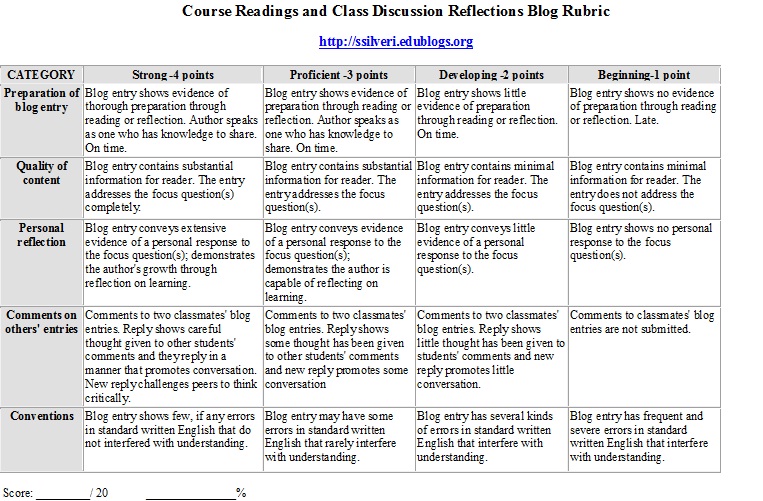
Archives
November 2026
Categories
All
|


 RSS Feed