 Reading: Frankenstein, MIT annotated edition, printed pages 16-69.
Victor devotes himself to bringing a new being into the world. Shelley describes his work through language associated with physical suffering, labor, and parenthood. Yet his anticipation of creating life differs sharply from his response when that life begins. What does this tension reveal about Victor’s understanding of creation and his responsibilities as a creator? Develop an interpretation that closely examines Shelley’s language and uses one annotation from pages 16-69 to deepen, complicate, or challenge your reading. Consider the associations with pregnancy, childbirth, or parenthood that Shelley’s descriptions invite. What does Victor expect from his creation, and what does he appear prepared (or unprepared) to give in return? Treat the annotation as another voice in the conversation. You may agree with its interpretation, qualify it, or question it using evidence from the novel. An important distinction throughout: Shelley’s characters offer competing accounts of their experiences, and the annotation contributors offer their interpretations of those accounts. Neither a narrator’s judgment nor a footnote should automatically become the reader’s final conclusion. In other words, feel free to disagree, but be prepared to defend your position with textual evidence and reasoning! Primary Blog Post: 300-400 Words, due by Tuesday, 11:59 PM. Your post should:
Before drafting, consider: What did I notice initially? What did the annotation help me notice? What do I now understand differently? Use your assigned nom de plume and include your word count. ***For this first discussion blog using annotations from the text, I am providing you with a few suggested annotations that you might find helpful. You are by NO MEANS restricted to these annotations:
Secondary Blog Responses: Two Responses, 100–150 Words each, due by Friday, 11:59 PM Read everyone’s primary posts, then select two that invite further discussion.
Go beyond agreement or praise: engage with your classmates’ reasoning and help move the conversation forward. Use your assigned nom de plume, write with minimal errors in grammar and usage, and include a word count for each response.  The action in this week's reading was both notable and contextually rich. We focused on Janine's highly ritualized birthing ceremony, Moira's escape, the Commander's odd games of Scrabble with Offred, contrasted with Offred's reflections on a childhood memory of a documentary about Nazi Germany. In this Primary blog entry, please consider how, in this week's reading, Atwood presents and connects the control and commodification of women in Gilead with the psychological effects of oppression. In your response, you might address any or all of the following prompts:
Secondary Blog Response Expectations (read everyone's primary responses, select two that interest you, and respond to their ideas): 100-150 words EACH, minimal errors in grammar and usage, thoughtful and thorough writing. Please use the name you were assigned in class as your nom de plume and be sure to add a word count. Due by 11:59 pm Sunday night, 2/22/2026.   Margaret Atwood employs three epigraphs at the beginning of The Handmaid's Tale to establish the novel's tone. Based on the epigraphs provided, analyze how each epigraph contributes to an understanding of:
Successful responses will cover:
Key Terms: Anachronistic: Something that seems to belong to a different time period than the one it is portrayed in. Imperative: A command or instruction given in the form of a sentence that starts with a verb. Metaphor: A way of describing something by comparing or calling it something else, creating a vivid image or meaning. Satire: A way of using humor, irony, or exaggeration to criticize or mock societal issues, individuals, or systems. Epigraph #1 “And when Rachel saw that she bare Jacob no children, Rachel envied her sister*; and said unto Jacob, Give me children, or else I die. And Jacob's anger was kindled against Rachel; and he said, Am I in God's stead, who hath withheld from thee the fruit of the womb? And she said, Behold my maid Bilhah, go in unto her; and she shall bear upon my knees, that I may also have children by her.” - Genesis 30:1-3 Epigraph #2 But as to myself, having been wearied out for many years with offering vain, idle, visionary thoughts, and at length utterly despairing of success, I fortunately fell upon this proposal.... -Jonathan Swift, A Modest Proposal Epigraph #3 ‘In the desert there is no sign that says, “Thou shalt not eat stones.”’ - Sufi Proverb Primary Blog Expectations (respond to the prompt above): Minimal errors in grammar and usage, thoughtful and thorough writing. Please use the name you were assigned in class as your nom de plume and be sure to add a word count. Due by 11:59 pm Friday night, 1/30/2026!  Victor Frankenstein initially agrees to create a female companion for the Creature, believing it will end the Creature’s suffering and prevent further violence. However, as he works, he becomes haunted by the possible consequences of his actions. In a moment of panic, he destroys the female, declaring, “She, who in all probability was to become a thinking and reasoning animal, might refuse to comply with a compact made before her creation” (Shelley 147). Here, Victor acknowledges that the female Creature would have agency and might reject the Creature as her mate, rendering his efforts futile. He also fears that together they might pose an even greater threat to humanity, perhaps even reproducing and creating a new race of beings beyond his control: “A race of devils would be propagated upon the earth who might make the very existence of the species of man a condition precarious and full of terror” (147).
How do Victor’s justifications for destroying the female Creature reveal his anxieties about power, control, and the natural order? An interesting activity is using a Feminist Critical Lens to critique these two sentences. Why might a female "thinking and reasoning animal [...] refuse to comply"? What is Mary Shelley suggesting when she invokes the idea of this "thinking and reasoning" creature rejecting the agreements made by others and thus producing an entire "race of devils [...] who might make the very existence of the species of man [...] precarious and full of terror"? Why is this "thinking and reasoning" creature refusing to comply to society's expectation of her role as a mate so much more monstrous than the first creature? Do you see a paradox between Victor Frankenstein's worries about this female creature and his ever-compliant love, Elizabeth? Elaborate. Primary Blog Expectations (respond to the prompt above): 200-250 words, minimal errors in grammar and usage, thoughtful and thorough writing. Please use the name you were assigned in class as your nom de plume and be sure to add word count. Due by 11:59pm Sunday night 3-9-2025!  Did I request thee, Maker, from my clay To mould me man? Did I solicit thee From darkness to promote me? -John Milton, Paradise Lost, X, 743-745 (1667) The creature reads John Milton's epic poem, Paradise Lost (1667). Milton's epic poem tells the story of how Adam and Eve live in peaceful harmony until they are seduced by Satan into eating from the Tree of Knowledge and are punished by being banished from the Garden of Eden. While reading Paradise Lost, the creature reports that he initially identifies with the character of "Adam" insofar as both are "united by no link to any other being in existence" (132). However, the creature also identifies with the character of "Satan": "Many times I considered Satan as the fitter emblem of my condition; for often, like him, when I viewed the bliss of my protectors, the bitter gall of envy rose within me" (132). Do you think the character bears a greater resemblance to Adam or Satan? Why? Primary Blog Expectations (respond to the prompt above): 150-200 words, minimal errors in grammar and usage, thoughtful and thorough writing. Please use the name you were assigned in class as your nom de plume and be sure to add word count. Due by 11:59pm Sunday night, 3/2/2025! Secondary Blog Response Expectations (read everyone's primary responses, select two that interest you, and respond to their ideas): 100-150 words EACH, minimal errors in grammar and usage, thoughtful and thorough writing. Please use the name you were assigned in class as your nom de plume and be sure to add word count. Due by 11:59pm Tuesday night, 3/4/2025! Extra Information: If you are unfamiliar with Paradise Lost by John Milton, Dr. Moore of Saint Thomas University will give you an excellent and relatively brief overview considering the complexity of this famous poem. As always, remember that this video lecture is Dr. Moore's interpretation of Milton's epic classic through the lens of sociopolitical thought. You may find that you have your own interpreation if you choose to read it. Summary: Paradise Lost, an epic poem by John Milton is arguably the greatest poem written in English. What is Paradise Lost about? Paradise Lost tells the story of the Garden of Eden, God's creation of humanity, Eve's temptation by Satan and Adam's subsequent temptation by Eve. It also tells the story of the War in Heaven, when Satan rebelled against God and fell to Hell. Paradise Lost is an extraordinary epic poem, its major themes include freedom, knowledge, justice, providence, republicanism and monarchy. This podcast provides a summary of some of Paradise Lost's major themes as well as some strategies for reading Milton's epic poem (GreatBooksProf).  Click the image above to listen to the NYPL podcast, "Frankenstein: Our Dark Mirror." In this Primary Blog Post, please copy/paste the notes from your favorite chapter ONLY of the New York Public Library's podcast, Frankenstein: Our Dark Mirror. You may want to "flesh them out" (pun entirely intended) first, as your classmates will be reading and commenting on them this weekend.
Primary Blog Expectations (respond to the prompt above): 200-250 words, minimal errors in grammar and usage, thoughtful and thorough writing. Please use the name you were assigned in class as your nom de plume and be sure to add word count. Due by 11:59pm Thurs night, Feb 6th! Secondary Blog Response Expectations (read everyone's primary responses, select two that interest you, and respond to their ideas): 100-150 words EACH, minimal errors in grammar and usage, thoughtful and thorough writing. Please use the name you were assigned in class as your nom de plume and be sure to add word count. Due by 11:59pm Friday night, Feb 7th! In Part 1 of A Thousand Splendid Suns, Nana says the following to her daughter, Mariam: “Women like us. We endure. It’s all we have.” Select three distinct passages from Part 1 (add page #) that show how this sentiment informs Mariam’s life and how it relates to themes you believe will be intrinsic to the larger meaning of the novel. Primary Blog Expectations (respond to the prompt above):
--200-250 words --minimal errors in grammar and usage --thoughtful and thorough writing --Use the name that you were assigned in class as your nom de plume. --Be sure to add word count. --Due by 11:59 PM on Sunday night! --REMEMBER, this is a Practice Assessment and, therefore, will not be accepted late. 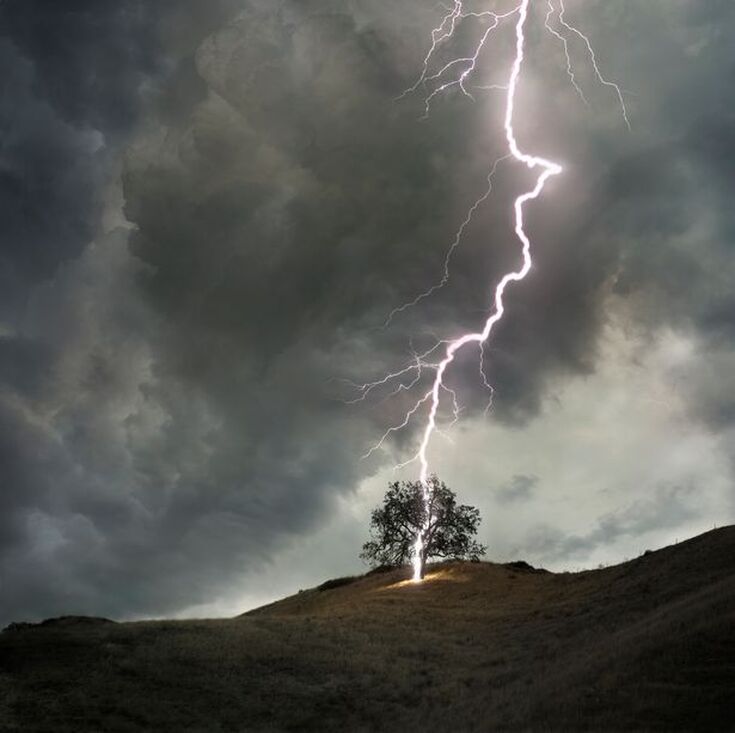 In what ways can imagination and inspiration unleash the best and worst in humankind? Primary Blog Expections: 200-250 words, minimal errors in grammar and usage, thoughtful and thorough writing. Please use the name you were assigned in class as your nom de plume and be sure to add word count. Due by 11:59 PM Friday night.
Secondary Blog Response Expectations (read everyone's primary responses, select two that interest you, and respond to their ideas): 100-150 words EACH, minimal errors in grammar and usage, thoughtful and thorough writing. Please use the name you were assigned in class as your nom de plume and be sure to add word count. Due by 11:59 PM Sunday night. 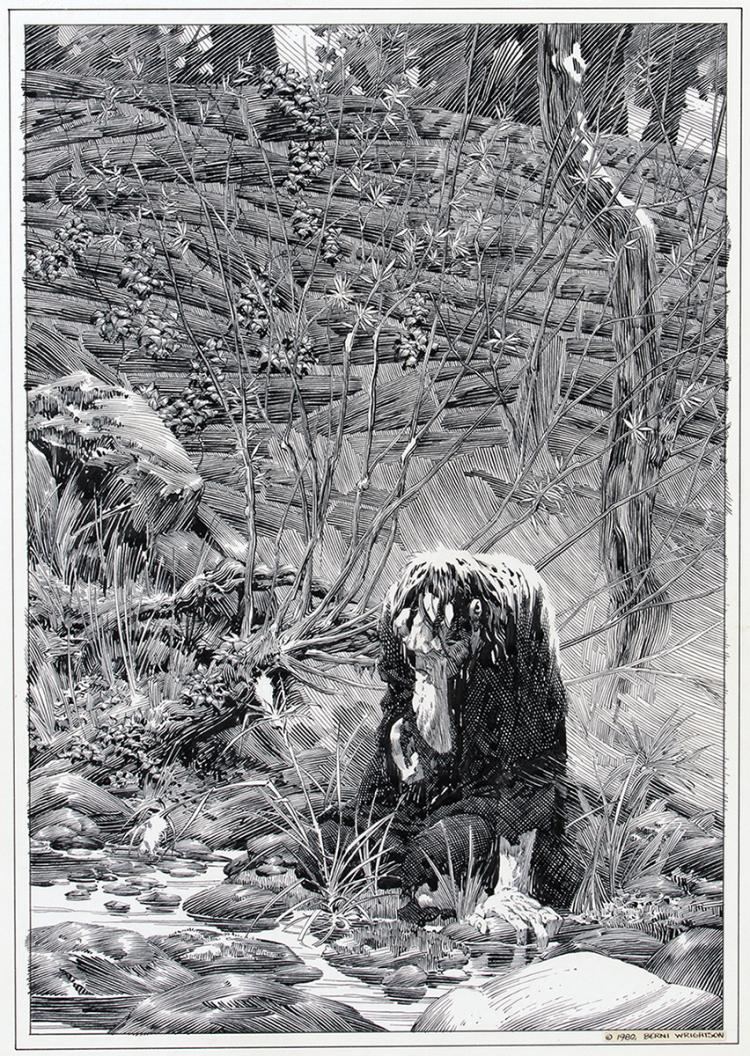 Frankenstein complicates the idea of what it means to be human. What combination of biology, experience or innate characteristics make us who we are? Primary Blog Expections: 200-250 words, minimal errors in grammar and usage, thoughtful and thorough writing. Please use the name you were assigned in class as your nom de plume and be sure to add word count. Due by 11:59 PM Friday night.
Secondary Blog Response Expectations (read everyone's primary responses, select two that interest you, and respond to their ideas): 100-150 words EACH, minimal errors in grammar and usage, thoughtful and thorough writing. Please use the name you were assigned in class as your nom de plume and be sure to add word count. Due by 11:59 PM Sunday night. "The Rime of the Ancient Mariner" (1798) by Samuel Taylor Coleridge - Discussion Question10/13/2022
|
Blog Post Rubric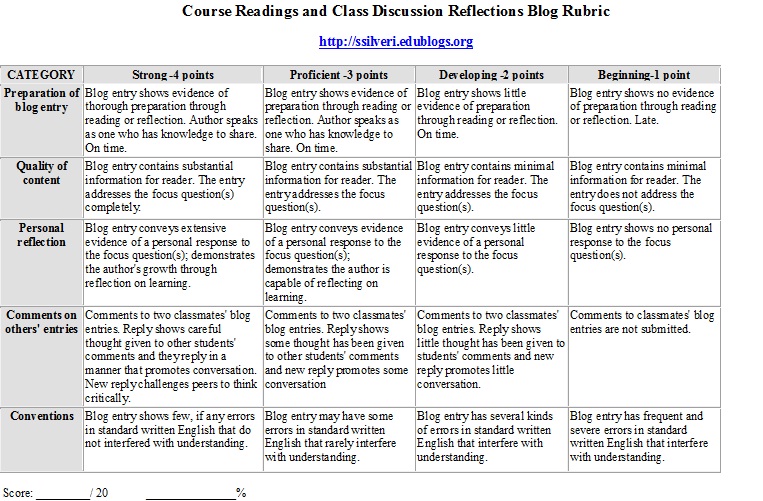
Archives
November 2026
Categories
All
|
 RSS Feed