THAT ENGLISH TEACHER
  • Home
  • Class Blogs
    • English IV Class Blog Period A
    • English IV Class Blog Period B
    • AP Literature Class Blog Periods C&F
    • RTPOPC Class Blog Period E
  • Contact Me
    • About Me...

AP Literature and Composition Blog

Discussion Question (Reading 2)- Creating Life: Where Does Responsibility Begin? - Primary and Secondary Blog Entries

10/18/2026

 
Picture
Reading: Frankenstein, MIT annotated edition, printed pages 16-69.

Victor devotes himself to bringing a new being into the world. Shelley describes his work through language associated with physical suffering, labor, and parenthood. Yet his anticipation of creating life differs sharply from his response when that life begins.

What does this tension reveal about Victor’s understanding of creation and his responsibilities as a creator?

Develop an interpretation that closely examines Shelley’s language and uses one annotation from pages 16-69 to deepen, complicate, or challenge your reading. Consider the associations with pregnancy, childbirth, or parenthood that Shelley’s descriptions invite. What does Victor expect from his creation, and what does he appear prepared (or unprepared) to give in return?

Treat the annotation as another voice in the conversation. You may agree with its interpretation, qualify it, or question it using evidence from the novel. An important distinction throughout: Shelley’s characters offer competing accounts of their experiences, and the annotation contributors offer their interpretations of those accounts. Neither a narrator’s judgment nor a footnote should automatically become the reader’s final conclusion. In other words, feel free to disagree, but be prepared to defend your position with textual evidence and reasoning!

Primary Blog Post: 300-400 Words, due by Tuesday, 11:59 PM.
Your post should:
  • Present a clear, defensible interpretation that answers the central question.
  • Analyze at least two brief quotations or specific textual details from Shelley’s novel (use proper MLA citation).
  • Engage with one annotation, identifying its contributor, note number, and page number.
  • Explain how that annotation changes or extends your understanding of a specific passage.
  • Use thoughtful, organized writing with minimal errors in grammar and usage.
Distinguish between the novelist and the annotation’s contributor: “Shelley describes…” and “In annotation ___, [contributor’s name] argues…”
Before drafting, consider: What did I notice initially? What did the annotation help me notice? What do I now understand differently?
Use your assigned nom de plume and include your word count.

***For this first discussion blog using annotations from the text, I am providing you with a few suggested annotations that you might find helpful. You are by NO MEANS restricted to these annotations:
  • Note 38, p. 36 - Dominic Berry: Does creating something establish ownership over it? How does that question change when the creation is a person or child?
  • Note 40, p. 37 - Melissa Wilson Sayres: How does Victor’s pride in his achievement complicate his expectations of gratitude and control?
  • Note 43, pp. 38–39 - Joey Eschrich: How might Victor’s isolation affect both his creative process and his ability to provide a social world for his creation?
  • Note 48, p. 41 - Joel Gereboff: Should readers accept Victor’s emotional revulsion as a sound judgment of the creature?
  • Note 49, pp. 42–43 - Stephani Etheridge Woodson: What happens when a creator judges the value of a living being through its appearance?

Secondary Blog Responses: Two Responses, 100–150 Words each, due by Friday, 11:59 PM
Read everyone’s primary posts, then select two that invite further discussion.
  • Response 1 - Connect interpretations:
Respond to a classmate who used a different annotation. Explain what their footnote helped you understand and how it connects to your own ideas about Victor’s responsibility.
  • Response 2 - Extend or challenge:
Offer a specific passage or alternative interpretation that develops or respectfully challenges another classmate’s argument. Explain how your evidence adds to the discussion.

Go beyond agreement or praise: engage with your classmates’ reasoning and help move the conversation forward.
Use your assigned nom de plume, write with minimal errors in grammar and usage, and include a word count for each response.

A Thousand Splendid Suns Part 1: Primary Blog Entry ONLY

2/3/2023

 
In Part 1 of A Thousand Splendid Suns, Nana says the following to her daughter, Mariam: “Women like us. We endure. It’s all we have.” Select three distinct passages from Part 1 (add page #) that show how this sentiment informs Mariam’s life and how it relates to themes you believe will be intrinsic to the larger meaning of the novel. 
Primary Blog Expectations (respond to the prompt above):
--200-250 words
--minimal errors in grammar and usage
--thoughtful and thorough writing
--Use the name that you were assigned in class as your nom de plume.
--Be sure to add word count. 
--Due by 11:59 PM on Sunday night!
--REMEMBER, this is a Practice Assessment and, therefore,  will not be accepted late.

Frankenstein: Chapters 13-19

12/1/2020

25 Comments

 
Picture

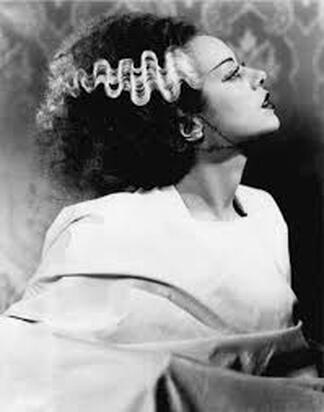
Examine the Creature’s argument and his demand of Frankenstein. Is it reasonable? How does the creature formulate his argument and does he argue successfully in your opinion? If you were Frankenstein, would you agree to it? Why or why not? After you read Frankenstein’s actions in these chapters, what do you think of his actions? 

​Primary Blog Expectations (respond to the prompt above): 200-250 words, minimal errors in grammar and usage, thoughtful and thorough writing. Please use the name you were assigned in class as your nom de plume and be sure to add word count. Due by 11:59pm Friday night 12-4-2020! 

Secondary Blog Response Expectations (read everyone's primary responses, select two that interest you, and respond to their ideas): 100-150 words EACH, minimal errors in grammar and usage, thoughtful and thorough writing. Please use the name you were assigned in class as your nom de plume and be sure to add word count. Due by 11:59pm Sunday night 12-6-2020!

25 Comments

The Road: Part III

1/31/2020

35 Comments


At this point in the novel, you may have found multiple parallels between the events in the text and Joseph Campbell's Monomyth as revealed in the summer reading text, How to Read Literature Like a Professor.
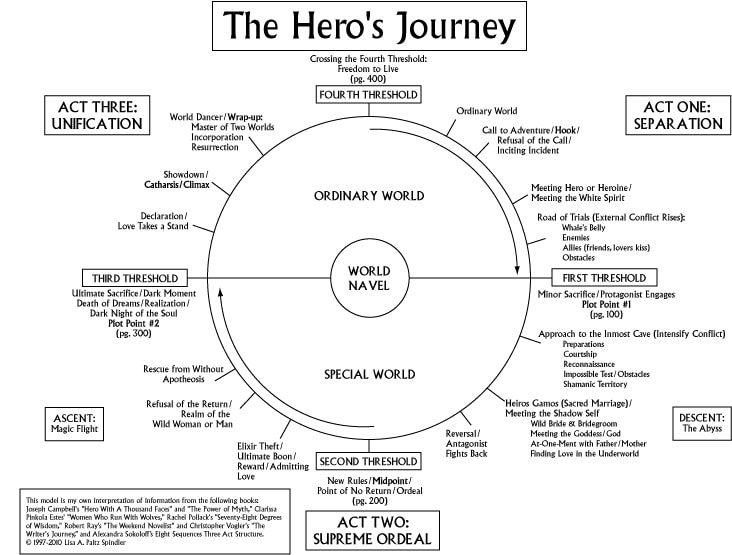
​Thinking back through the Man and the Boy's journey to the coast, identify and explain 3 specific events that fulfill Campbell's theory (clearly, this is an inexact activity-not all elements of the Hero's Journey are evident in every story). Your explanation should cite a specific passage though you do not need to do more than paraphrase the event. Your explanation, however, should illuminate how Campbell's Monomyth/Hero's journey can be used as a lens on McCarthy's novel.

​Part One Expectations (respond to the prompt above): 200-250 words, minimal errors in grammar and usage, thoughtful and thorough writing. Please use the assigned "pen name" given to you in class as your nom de plume. DUE: Friday night at midnight (1/31)!

Part Two Expectations (read everyone's first responses, select two that interest you, and respond to their ideas): 100-150 words EACH, minimal errors in grammar and usage, thoughtful and thorough writing.  DUE: Sunday night at midnight (2/2)!

Picture
35 Comments

The Road: Part II+ (to complete this prompt, please read through page 175)

1/23/2020

 
Picture

The sardonic blind man named Ely, who the man and boy encounter on the road, tells the father that, "There is no God and we are his prophets" [p. 170]. What does he mean by this? Why does the father say about his son, later in the same conversation, "What if I said that he's a god?" [p. 172]. Are we meant to see the son as a savior? Why is Ely the only character named in this novel? What does this mean and how does it affect your understanding of the meaning of the work as a whole?

​Part One Expectations (respond to the prompt above): 200-250 words, minimal errors in grammar and usage, thoughtful and thorough writing. Please use the assigned "pen name" given to you in class as your nom de plume. DUE: Friday night at midnight (1/24)!

Part Two Expectations (read everyone's first responses, select two that interest you, and respond to their ideas): 100-150 words EACH, minimal errors in grammar and usage, thoughtful and thorough writing.  DUE: Sunday night at midnight (1/26)!

The Road: Part 1

1/17/2020

 
Picture

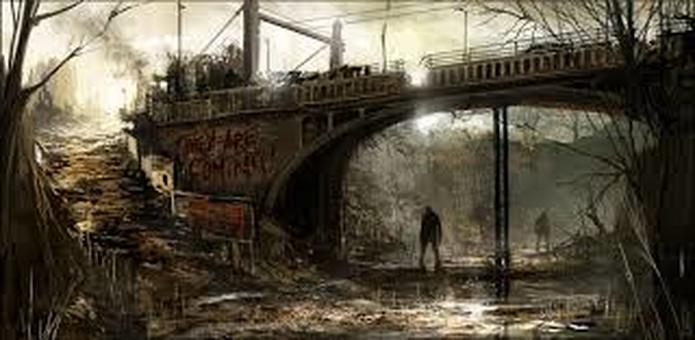
How is McCarthy able to make the post-apocalyptic world of The Road seem so real and utterly terrifying? Which descriptive passages are especially vivid and visceral in their depiction of this blasted landscape (please cite)? What do you find to be the most horrifying features of this world and the survivors who inhabit it? 

Part One Expectations (respond to the prompt above): 200-250 words, minimal errors in grammar and usage, thoughtful and thorough writing. Please use the assigned "pen name" given to you in class as your nom de plume. DUE: Friday night at midnight!

Part Two Expectations (read everyone's first responses, select two that interest you, and respond to their ideas): 100-150 words EACH, minimal errors in grammar and usage, thoughtful and thorough writing.  DUE: Sunday night at midnight!

A Thousand Splendid Suns (Part 3.2) Primary and Secondary Blog Posts

4/6/2018

 
Picture

This image could depict Mariam at peace in the final chapter of Part 3.2 of A Thousand Splendid Suns. While this moment is important, it is no means the only significant point in these chapters.
After having read these chapters:
   -Select a single passage (this may be a single paragraph or several) that you feel best typifies the action and Hosseini's authorial intent in this section of ATSS. 
   -Explain the action and context of the quoted passage (you must cite the passage) and then,
 -Explain how your understanding of this passage (1) supports your understanding, (2) deepens the character development, and/or (3) builds a central message that aligns with one of the unit's essential questions. 


Primary Blog Expectations (respond to the prompt above): 200-250 words, minimal errors in grammar and usage, thoughtful and thorough writing. Please use the name you were assigned in class as your nom de plume and be sure to add word count. Due by 11:59pm Friday night 4-6-2018! 

Secondary Blog Response Expectations (read everyone's primary responses, select two that interest you, and respond to their ideas): 100-150 words EACH, minimal errors in grammar and usage, thoughtful and thorough writing. Please use the name you were assigned in class as your nom de plume and be sure to add word count. Due by 11:59pm Sunday night 4-8-2018! 
 ​​

A Thousand Splendid Suns Part II (Primary and Secondary Blog Posts)

3/21/2018


These images could depict some of the main plot points of Part II of A Thousand Splendid Suns. While these moments are important, they are by no means the only significant points in these chapters.
After having read these chapters:
   -Select a single passage (this may be a single paragraph or several) that you feel best typifies the thematic importance of "shelter" in this section of ATSS. 
   -Explain the action and context of the quoted passage (you must cite the passage) and then,
 -Explain how your understanding of this passage (1) supports your contextual understanding, (2) deepens the character development, and/or (3) builds a central message that aligns with one of the unit's essential questions. 

Primary Blog Expectations (respond to the prompt above): 200-250 words, minimal errors in grammar and usage, thoughtful and thorough writing. Please use the name that you were assigned in class as your nom de plume and be sure to add word count. Due by 11:59pm on Friday night! 

Secondary Blog Response Expectations (read everyone's primary responses, select two that interest you, and respond to their ideas): 100-150 words EACH, minimal errors in grammar and usage, thoughtful and thorough writing.  
Please use the name that you were assigned in class as your nom de plume and be sure to add word count. Due by 11:59pm on Sunday night! 

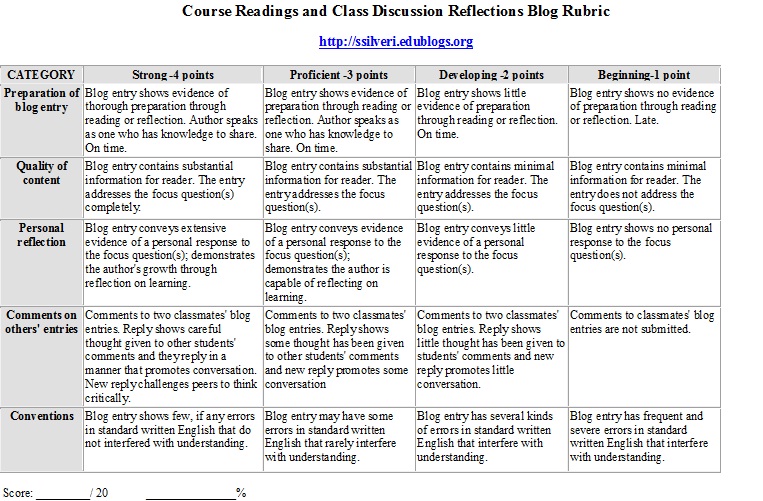
    Blog Post Rubric

    Picture

    Archives

    November 2026
    October 2026
    April 2026
    March 2026
    February 2026
    January 2026
    December 2025
    November 2025
    March 2025
    February 2025
    January 2025
    February 2023
    November 2022
    October 2022
    January 2021
    December 2020
    November 2020
    March 2020
    February 2020
    January 2020
    November 2019
    October 2019
    September 2019
    March 2019
    February 2019
    January 2019
    December 2018
    November 2018
    October 2018
    September 2018
    April 2018
    March 2018
    January 2018
    December 2017
    November 2017
    October 2017
    March 2017
    February 2017
    January 2017
    December 2016
    November 2016
    October 2016
    September 2016
    November 2015
    October 2015
    September 2015
    March 2015
    February 2015
    April 2014
    March 2014

    Categories

    All
    A Doll's House
    Adrienne Rich
    Afghanistan
    Albert Rios
    Anton Chekhov
    As I Lay Dying
    A Thousand Splendid Suns
    Barbara Kingsolver
    Biology
    Charlotte Bronte
    Chemistry
    Class Division
    Community
    Congo/Zaire
    Contrasts
    Cormac McCarthy
    Critical Lens
    Cross Cultural Misconceptions
    Cross-Cultural Misconceptions
    Danusha Laméris
    Denise Duhamel
    Dystopia
    Ethics
    Family
    Frankenstein
    Gateshead
    Gender Roles
    Gender Study
    Hamlet
    Henrik Ibsen
    Henry Wadsworth Longfellow
    Hesitation
    Hope And Despair
    Hubris
    Humanity
    Identity
    Imagery
    Imagination
    Independent Reading
    Invention
    Jane Eyre
    John Donne
    Joy Harjo
    Khaled Hosseini
    Literary Analysis
    Literature
    March Madness
    Margaret Atwood
    Maryann Corbett
    Mary Shelley
    Morality
    Naomi Shihab Nye
    Objectivity V. Subjectivity
    Pablo Neruda
    Paradise Lost
    Parent Child Relationships
    Parent-Child Relationships
    Perseverance
    Perspective
    Phillis Wheatley
    Pleasure Reading
    Poetry
    Psychology
    Radiolab
    Ralph Waldo Emerson
    Reading
    Relationships
    Religion
    Right Vs. Wrong
    Rita Dove
    Ritual
    Rudy Francisco
    Samuel Taylor Coleridge
    Sanity
    Science
    Shelter
    Soliloquy
    Suspense
    Symbolism
    Tennyson
    The Handmaid's Tale
    The Lady With The Little Dog
    The Poisonwood Bible
    The Rime Of The Ancient Mariner
    The Road
    Tracy K. Smith
    Ulysses
    Victor Hernandez Cruz
    Virtual Poetry Unit
    Week 1 Poetry Activity
    William Faulkner
    Women's Roles

    RSS Feed

  • Home
  • Class Blogs
    • English IV Class Blog Period A
    • English IV Class Blog Period B
    • AP Literature Class Blog Periods C&F
    • RTPOPC Class Blog Period E
  • Contact Me
    • About Me...