 Context: As you read The Handmaid’s Tale, pay attention to two big ideas:
1) World-building (Setting) This isn’t just “where and when.” It’s how the entire society operates: its rules, routines, symbols, and what people are permitted (or not permitted) to do. 2) Narrative Voice This is how the story is told and who is telling it. Offred’s voice shapes what we notice, what we trust, and what we question. These two things work together: the setting shows us what kind of world Gilead is, and Offred’s voice shows us what it feels like to live there. After this week’s reading, you can see that The Handmaid’s Tale blends genres: it’s speculative, realistic, and dystopian. You’re also learning that Gilead’s rise and its religious government controls nearly every part of life in what used to be the United States. Finally, you’re starting to see that Offred is full of contradictions: she is oppressed, but she also finds ways to be resistant. Even when the system tries to erase her identity, she uses memory and storytelling to hold on to her sense of self. This also connects to the difference between “freedom from” (freedom from danger or chaos) and “freedom of” (freedom to choose your own life). Prompt: Write a response about this week’s reading that explains how the setting and Offred’s narrative voice help Atwood highlight themes like:
In your response, use at least a few of the terms below (and apply them correctly):
Success Criteria: 1. Make a clear claim (what Atwood is showing and why it matters). 2. Use the vocabulary accurately (choose terms that truly fit your examples). 3. Use specific evidence from the text, such as:
Primary Blog Expectations (respond to the prompt above): 200-250 words, minimal errors in grammar and usage, thoughtful and thorough writing. Please use the name you were assigned in class as your nom de plume and be sure to add a word count. Due by 11:59 pm Friday night, 2/5/2026. Secondary Blog Response Expectations (read everyone's primary responses, select two that interest you, and respond to their ideas): 100-150 words EACH, minimal errors in grammar and usage, thoughtful and thorough writing. Please use the name you were assigned in class as your nom de plume and be sure to add a word count. Due by 11:59 pm Sunday night, 2/7/2026.  The words that Shelley uses to describe Frankenstein's process of creation suggest that it is analogous to pregnancy and childbirth. Just as pregnant women in the 18th century were confined to a room before going into labor, Frankenstein describes himself as "emaciated with confinement" and beset by a "slow fever" (Shelly 55, 57). He repeatedly refers to his "midnight labors" and anticipates the day when his "labors would [...] end" (Shelley 55, 57). Why might Shelley compare the male protagonist's process of creation with a woman's biological process of giving birth? What is the purpose of the comparison?
Primary Blog Expectations (respond to the prompt above): 100-150 words, minimal errors in grammar and usage, thoughtful and thorough writing. Please use the name you were assigned in class as your nom de plume and be sure to add word count. Due by 11:59pm tonight 2-24-2025! Secondary Blog Response Expectations (read everyone's primary responses, select two that interest you, and respond to their ideas): 100-150 words EACH, minimal errors in grammar and usage, thoughtful and thorough writing. Please use the name you were assigned in class as your nom de plume and be sure to add word count. Due by 11:59pm Thursday night 2-28-2025! 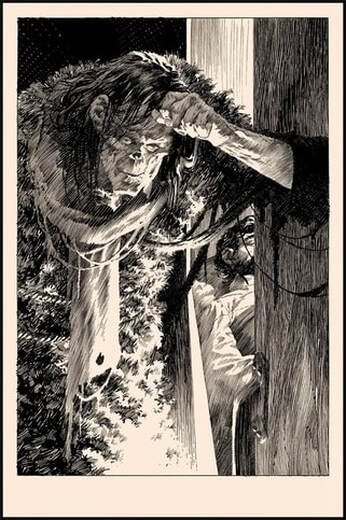 Final Blog Prompt: Chapters 22 and 23 contain a strong sense of foreboding, or the feeling of a catastrophe around the corner. Look through these chapters and demonstrate how suspense is used to foreshadow future doom. Use several examples to prove your point. Relate these examples to the function of a gothic novel.
Primary Blog Expectations (respond to the prompt above): 200-250 words, minimal errors in grammar and usage, thoughtful and thorough writing. Please use the name you were assigned in class as your nom de plume and be sure to add word count. Due by 11:59pm Friday night 12-11-2020! Secondary Blog Response Expectations (read everyone's primary responses, select two that interest you, and respond to their ideas): 100-150 words EACH, minimal errors in grammar and usage, thoughtful and thorough writing. Please use the name you were assigned in class as your nom de plume and be sure to add word count. Due by 11:59pm Sunday night 12-13-2020! 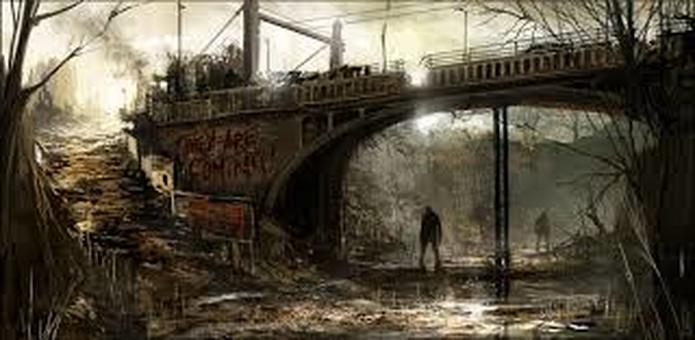 The sardonic blind man named Ely, who the man and boy encounter on the road, tells the father that, "There is no God and we are his prophets" [p. 170]. What does he mean by this? Why does the father say about his son, later in the same conversation, "What if I said that he's a god?" [p. 172]. Are we meant to see the son as a savior? Why is Ely the only character named in this novel? What does this mean and how does it affect your understanding of the meaning of the work as a whole?
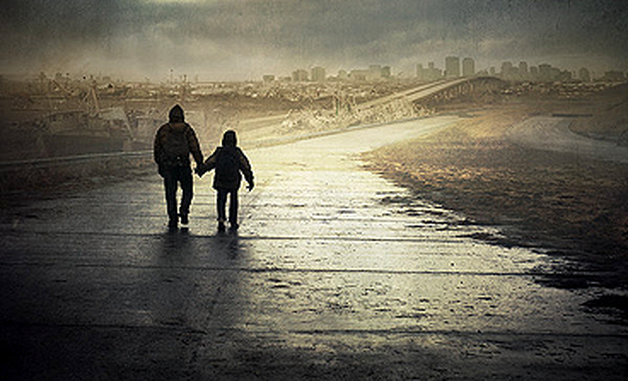 How is McCarthy able to make the post-apocalyptic world of The Road seem so real and utterly terrifying? Which descriptive passages are especially vivid and visceral in their depiction of this blasted landscape (please cite)? What do you find to be the most horrifying features of this world and the survivors who inhabit it?
These images could depict some of the main plot points of Part II of A Thousand Splendid Suns. While these moments are important, they are by no means the only significant points in these chapters.
|
Blog Post Rubric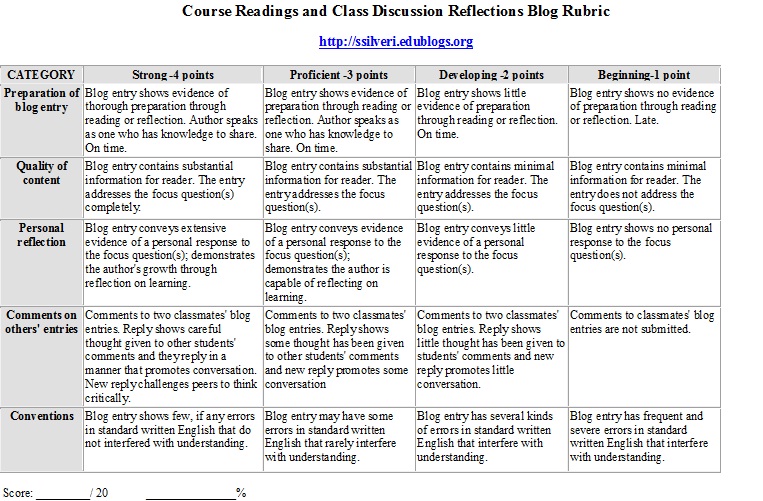
Archives
November 2026
Categories
All
|


 RSS Feed