 Jezebel's, as a setting, encapsulates the duality of Gilead: a regime that outwardly enforces strict moral codes but inwardly indulges in depravity and excess. The "masquerade" atmosphere serves as a metaphor for the regime itself-a facade of order masking chaos and corruption. Offred's internal conflict is mirrored in the women around her. Serena Joy serves as her foil; a woman who, despite their class difference, represents the women who see the hypocrisy but have submitted themselves to it. Ofglen is the moral voice of resistance, while Moira's voice serves as a spirit of her past. This fragmented identity is apparent as Offred struggles to reconcile her pre-Gilead self with her current reality. This doubling of identity is further illustrated in her connection to Nick, who represents both a risk and a refuge. This moral ambiguity comes to life in Offred's "particicution" during the Salvaging. While resistance is critical, survival is fundamental, so safety through acquiescence becomes obvious. In your response, you might address any or all of the following prompts:
Secondary Blog Response Expectations (read everyone's primary responses, select two that interest you, and respond to their ideas): 100-150 words EACH, minimal errors in grammar and usage, thoughtful and thorough writing. Please use the name you were assigned in class as your nom de plume and be sure to add a word count. Due by 11:59 pm Sunday night, 3/1/2026.   Context: As you read The Handmaid’s Tale, pay attention to two big ideas:
1) World-building (Setting) This isn’t just “where and when.” It’s how the entire society operates: its rules, routines, symbols, and what people are permitted (or not permitted) to do. 2) Narrative Voice This is how the story is told and who is telling it. Offred’s voice shapes what we notice, what we trust, and what we question. These two things work together: the setting shows us what kind of world Gilead is, and Offred’s voice shows us what it feels like to live there. After this week’s reading, you can see that The Handmaid’s Tale blends genres: it’s speculative, realistic, and dystopian. You’re also learning that Gilead’s rise and its religious government controls nearly every part of life in what used to be the United States. Finally, you’re starting to see that Offred is full of contradictions: she is oppressed, but she also finds ways to be resistant. Even when the system tries to erase her identity, she uses memory and storytelling to hold on to her sense of self. This also connects to the difference between “freedom from” (freedom from danger or chaos) and “freedom of” (freedom to choose your own life). Prompt: Write a response about this week’s reading that explains how the setting and Offred’s narrative voice help Atwood highlight themes like:
In your response, use at least a few of the terms below (and apply them correctly):
Success Criteria: 1. Make a clear claim (what Atwood is showing and why it matters). 2. Use the vocabulary accurately (choose terms that truly fit your examples). 3. Use specific evidence from the text, such as:
Primary Blog Expectations (respond to the prompt above): 200-250 words, minimal errors in grammar and usage, thoughtful and thorough writing. Please use the name you were assigned in class as your nom de plume and be sure to add a word count. Due by 11:59 pm Friday night, 2/5/2026. Secondary Blog Response Expectations (read everyone's primary responses, select two that interest you, and respond to their ideas): 100-150 words EACH, minimal errors in grammar and usage, thoughtful and thorough writing. Please use the name you were assigned in class as your nom de plume and be sure to add a word count. Due by 11:59 pm Sunday night, 2/7/2026.  Margaret Atwood employs three epigraphs at the beginning of The Handmaid's Tale to establish the novel's tone. Based on the epigraphs provided, analyze how each epigraph contributes to an understanding of:
Successful responses will cover:
Key Terms: Anachronistic: Something that seems to belong to a different time period than the one it is portrayed in. Imperative: A command or instruction given in the form of a sentence that starts with a verb. Metaphor: A way of describing something by comparing or calling it something else, creating a vivid image or meaning. Satire: A way of using humor, irony, or exaggeration to criticize or mock societal issues, individuals, or systems. Epigraph #1 “And when Rachel saw that she bare Jacob no children, Rachel envied her sister*; and said unto Jacob, Give me children, or else I die. And Jacob's anger was kindled against Rachel; and he said, Am I in God's stead, who hath withheld from thee the fruit of the womb? And she said, Behold my maid Bilhah, go in unto her; and she shall bear upon my knees, that I may also have children by her.” - Genesis 30:1-3 Epigraph #2 But as to myself, having been wearied out for many years with offering vain, idle, visionary thoughts, and at length utterly despairing of success, I fortunately fell upon this proposal.... -Jonathan Swift, A Modest Proposal Epigraph #3 ‘In the desert there is no sign that says, “Thou shalt not eat stones.”’ - Sufi Proverb Primary Blog Expectations (respond to the prompt above): Minimal errors in grammar and usage, thoughtful and thorough writing. Please use the name you were assigned in class as your nom de plume and be sure to add a word count. Due by 11:59 pm Friday night, 1/30/2026!  The words that Shelley uses to describe Frankenstein's process of creation suggest that it is analogous to pregnancy and childbirth. Just as pregnant women in the 18th century were confined to a room before going into labor, Frankenstein describes himself as "emaciated with confinement" and beset by a "slow fever" (Shelly 55, 57). He repeatedly refers to his "midnight labors" and anticipates the day when his "labors would [...] end" (Shelley 55, 57). Why might Shelley compare the male protagonist's process of creation with a woman's biological process of giving birth? What is the purpose of the comparison?
Primary Blog Expectations (respond to the prompt above): 100-150 words, minimal errors in grammar and usage, thoughtful and thorough writing. Please use the name you were assigned in class as your nom de plume and be sure to add word count. Due by 11:59pm tonight 2-24-2025! Secondary Blog Response Expectations (read everyone's primary responses, select two that interest you, and respond to their ideas): 100-150 words EACH, minimal errors in grammar and usage, thoughtful and thorough writing. Please use the name you were assigned in class as your nom de plume and be sure to add word count. Due by 11:59pm Thursday night 2-28-2025!  Conduct a brief search on your chosen 19th century female scientist. Acting in her persona, compose a brief 1st person POV paragraph to introduce yourself. In your introduction, include your background information, your specialization, and any awards or distinctions you have earned. If you can find a interesting fact to add that is non-science related, incorporate that here. Your tone can be conversational, serious, comedic, or any that you feel best fits your persona. Include an image, if you can.
Remember, only use your Pen Name. I will know who you are. Have fun creating your fictionalized character of a real person, but do try to be faithful to your scientist's reality. Expectations:
In Part 1 of A Thousand Splendid Suns, Nana says the following to her daughter, Mariam: “Women like us. We endure. It’s all we have.” Select three distinct passages from Part 1 (add page #) that show how this sentiment informs Mariam’s life and how it relates to themes you believe will be intrinsic to the larger meaning of the novel. Primary Blog Expectations (respond to the prompt above):
--200-250 words --minimal errors in grammar and usage --thoughtful and thorough writing --Use the name that you were assigned in class as your nom de plume. --Be sure to add word count. --Due by 11:59 PM on Sunday night! --REMEMBER, this is a Practice Assessment and, therefore, will not be accepted late.  This image could depict Mariam at peace in the final chapter of Part 3.2 of A Thousand Splendid Suns. While this moment is important, it is no means the only significant point in these chapters.
|
Blog Post Rubric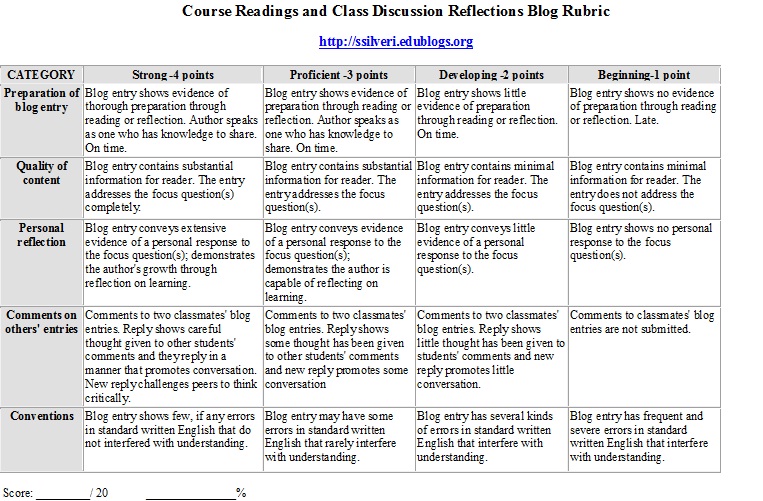
Archives
November 2026
Categories
All
|




 RSS Feed