 Reading: Frankenstein, MIT annotated edition, printed pages 16-69.
Victor devotes himself to bringing a new being into the world. Shelley describes his work through language associated with physical suffering, labor, and parenthood. Yet his anticipation of creating life differs sharply from his response when that life begins. What does this tension reveal about Victor’s understanding of creation and his responsibilities as a creator? Develop an interpretation that closely examines Shelley’s language and uses one annotation from pages 16-69 to deepen, complicate, or challenge your reading. Consider the associations with pregnancy, childbirth, or parenthood that Shelley’s descriptions invite. What does Victor expect from his creation, and what does he appear prepared (or unprepared) to give in return? Treat the annotation as another voice in the conversation. You may agree with its interpretation, qualify it, or question it using evidence from the novel. An important distinction throughout: Shelley’s characters offer competing accounts of their experiences, and the annotation contributors offer their interpretations of those accounts. Neither a narrator’s judgment nor a footnote should automatically become the reader’s final conclusion. In other words, feel free to disagree, but be prepared to defend your position with textual evidence and reasoning! Primary Blog Post: 300-400 Words, due by Tuesday, 11:59 PM. Your post should:
Before drafting, consider: What did I notice initially? What did the annotation help me notice? What do I now understand differently? Use your assigned nom de plume and include your word count. ***For this first discussion blog using annotations from the text, I am providing you with a few suggested annotations that you might find helpful. You are by NO MEANS restricted to these annotations:
Secondary Blog Responses: Two Responses, 100–150 Words each, due by Friday, 11:59 PM Read everyone’s primary posts, then select two that invite further discussion.
Go beyond agreement or praise: engage with your classmates’ reasoning and help move the conversation forward. Use your assigned nom de plume, write with minimal errors in grammar and usage, and include a word count for each response.
Rosina Zornlin
10/19/2026 01:44:20 pm
Victor’s reaction to his creation reveals that he understands parenthood as an achievement that earns gratitude rather than a relationship that requires continuing care. Shelley’s language connects his experiment to the bodily suffering of childbirth, but his abandonment of the creature exposes the gap between enduring the work of creation and accepting responsibility for another life. 10/20/2026 04:20:36 pm
I like this note you picked because not only does it show that Victor sees his creation of the creature as more of a reward than a commitment because of his possessiveness in beneath Victors imagination of fatherhood, but it also ties into my idea that Victor only saw the creature as a means of attaining fame and glory rather than responsibility or commitment because Berry's note goes over how Victor sees the birth of the monster as more of reward than a commitment showing how little he cares about actually parenting the creature, as he only truly cares about the fame, glory, and possible rewards he'll get for creating such a creation not realizing that, that will lead to his eventual downfall.
Jiang Hua
10/22/2026 11:51:07 am
The annotation you used in combination with your careful response helps develop the idea that Victor's primary concern with creating the monster lies in the recognition he gains from "ownership." In creating, Victor believes instead of providing something to the world, or advancing the science of the age, his creation serves to praise him for his genius in creating it. This extends my own idea about Victor's faulty sense of responsibility because it shows that Victor hasn't pondered what it means to be a "father" outside of being the creator. He desires the reward that comes from his work, and remains neutral to any other implications it may have. This sort of distance Victor attempts to create from the actual responsibility of his work furthers our shared point that Victor isn't prepared to care for a being who will need him.
Helen Almira Shafer
10/22/2026 12:03:24 pm
I like what you talked about and it expanded my way of thinking about the "birth" of Frankenstein's creature. With the point you made about the creation of the monster having a physical toil on him, I think about the last paragraph of chapter 3. In this paragraph Frankenstein speaks of his condition, and how he looked to the outside world. In this paragraph he talks about his harsh anxiety, even being bedridden at night. "Every night I was oppressed by a slow fever, and I became nervous to a painful degree." This further supports your statement with the pain that Frankenstein has to go through to make this creation, so much so that he is bedridden and making himself ill. This then correlates to childbirth with the different morning sickness or changes a pregnant woman might experience.
CKRW
10/23/2026 09:44:55 am
You do a thoughtful job connecting Shelley’s text with the MIT annotations, especially Dominic Berry’s ideas about Victor’s possessive language and his failure to care for the being he creates. Your discussion of the difference between creating life and taking responsibility for it raises an interesting question: How might Victor’s scientific methods have encouraged him to see the creature as an experiment rather than a living being who needs empathy and care? If you want, work on the transition from Berry’s annotation to your personal reflection so readers can follow the connection between the historical context and your interpretation of Victor’s psychology.
Mary ball
10/19/2026 02:56:12 pm
Victor Frankenstein wants to create life, but he does not really think about what he will do when it works. He spends so much time trying to finish his experiment that he forgets about everything else. Then, when the creature comes alive, Victor is scared of it and leaves. This shows that wanting to accomplish something is different from actually being ready for it. Shelley compares Victor’s experience to pregnancy because he works hard and suffers while making the creature. He gets sick and stays away from other people, which shows how difficult the process is. He probably thinks all this effort will be worth it when he succeeds. However, the creature does not look the way he expected. Instead of being proud, Victor wishes he had never made it. One of the footnotes says that Victor’s problem is that he does not have friends helping him with his experiment (Shelley 39). I agree because other people could have explained why his plan was dangerous. The annotation basically shows that working alone makes people lose their judgment. If Henry had been there earlier, he probably could have stopped Victor before things went wrong. Victor also expects the creature to be grateful, even though he immediately abandons it. This is unfair because the creature did not ask to be created. Victor acts like his job is finished once the creature is alive, but that should be when his real responsibility starts. Overall, Shelley shows that people need to think about the consequences of their actions instead of only focusing on their goals.
Mary Ward
10/22/2026 11:54:16 am
I think your point regarding Victor's incapability to see beyond the goals of his experiment couldn't be more true. His blindness resulting from his strong ambition ended up causing more harm to not only himself but also the people around him. I think this also plays into why he didn't have anyone helping him with his experiment like mentioned in the footnote. Victor wanted all of the credit for this work and wanted it to be successful in the eyes of others so he would receive all of the glory.
CKRW
10/23/2026 09:47:49 am
You have demonstrated an impressive ability to synthesize complex annotations with the primary text, particularly in your nuanced discussion of how Victor’s lack of collaborative judgment directly precipitates his moral failure. How might Victor’s trajectory have shifted if he had integrated the 'social support' mentioned in the footnotes earlier in his process, and what does that suggest about the necessity of community in scientific ethics? To polish this piece for publication, aim to expand your synthesis of secondary source commentary to meet the 300-400 word requirement, ensuring you include a clear thesis statement, a pseudonym, and a final word count.
Rukhmabhai
10/23/2026 07:36:21 pm
I really like your approach because I had not thought about how Victor’s solitude affected his reactions to the creature. The footnote helped me understand that Victor’s biggest mistake was working alone without anyone to question his decisions. There was no one there for Victor to confide in and share his plans for the creature. I believe if he had someone to discuss his wrongdoings with, then they could have gave him good advice. Especially Henry because he was described to be kind, Henry would have explained to Victor why it was wrong to leave the creature. I think Victor needed an opportunity to take a step back and evaluate the morals he was violating through his actions.
Marie Rennotte
10/25/2026 07:14:41 pm
Your focus on Joey Eschrich footnote about Victor's isolation gives an angle on how Victor fell apart as a maker. While you say that isolation clouded Victor's judgment during the test I would like this to be Victor's failure to grasp parenting. In my response, I looked at Melissa Wilson Sayres' note on ownership and Eschrich s comment on isolation clearly shows how ownership turns into Victor's only way of thinking. Because Victor shut himself off from people he missed seeing joint care. He saw his work as a science trophy instead of a living thing that would need community. Victor's isolation did not mess up his science; it made Victor sees his creation as a lonely object to control instead of a social life to raise. 10/19/2026 08:19:03 pm
Victor's reaction to his creation and the monstrosity that he made reveals that he interprets the commitment that is parenthood as an achievement that should be applauded and congratulated for instead of a healthy, brewing relationship that needs affection and care. Shelley's language connects his experiment to the overall hassle that is parenthood, as the eventual abandonment of Victor to his creation exposes his true intentions, not of love and care but of glory and accomplishment. Similarly, Victor explains in his opinion of his father's motivation for marriage and parenthood saying that "It was not until the decline of life that he thought of marrying", and referring to the birth of his son as "carrying virtues and posterity" (Shelley 16). These phrases tie into Victor's idea of parenthood and childbirth bringing glory, legacy, and civic duty, over pure love and emotional bonds. He sees children as vessels ors successors to carry a legacy forward, which mirrors his ultimate goal in creating the monster in the first place: to gain immortal renown and have a new creature bless him as its one and only creator. This lust for glory ultimately led to the foreshadowing of his downfall, "I nearly sank to the ground through languor and extreme weakness. Mingled with this horror, I felt the bitterness of disappointment" (Shelley 44). In his unquenchable thirst for fame and glory by creating the Frankenstein, when face-to-face with his monstrosity of a creature what's left isn't feelings of accomplishment or pride but feelings of horror and fear seemingly running away from the responsibility of his child and abandoning his parenthood. In annotation 52 on page 44, Mary argues the idea that when faced with the responsibility of handling his creation whom he had given birth to he chooses to run away, avoiding any responsibility for the creature's potential life and suffering. Mary's analysis and perspective on Victor's reaction to his creation helped me realize how two-faced he is because on one side he can't wait to finish making his creature and gain the fame and glory that comes with it, but on the other side when faced with the consequences of creating a monster without thinking about the possible drawbacks of his accomplishment he ultimately runs away from his responsibility to nurture and take care of it. Leading to the monster 's anger and fury only growing further foreshadowing his impending doom at the hands of his own greatest achievement, giving the monster all the glory that he intended for himself. Overall, Shelley emphasizes that when faced with your past mistakes, don't run away from them and instead learn to accept them for what they are as that will only shape you to become a better person in the future.
Evangelina Bottero
10/20/2026 09:15:34 pm
I love that you connected Victor's intentions when creating the creature to his wording when he described his father's choice to have children, as he makes it seem as though children are only a means of carrying on your legacy so you are not forgotten. One quote that strengthens this argument would be where Victor is talking about how he wished to go through the project without any emotional distraction, saying, "I wished, as it were, to procrastinate all that related to my feelings of affection until the great object, which swallowed up every habit of my nature, should be completed." This section shows that Victor doesn't understand that creating life doesn't only require effort and labor, as it is also a very emotionally taxing endeavour. If he truly wanted his creature to be grateful for the hard work he put into creating it, he should've worked to build the connection and gain the respect that would lead to the creature possibly feeling this way.
Mary Ward
10/22/2026 12:01:17 pm
I think that your analysis of the expectations vs. reality that Victor is facing is clearly depicted in the novel. His reaction to the creature once it comes alive is nothing of his initial expectations and goals. One annotation I think could strengthen your quote would be annotation 49 by Stephani Etheridge Woodson. In this annotation, Woodson compares the scene of Victor seeing his final creation to that of Genesis 1:32. This comparison suggests that Victor is looking at his creature from a physical perspective of beauty rather than an internal perspective of beauty which seems to be why he looks at it with “disgust” and "horror.”
CKRW
10/23/2026 09:51:12 am
You have demonstrated an exceptional ability to synthesize the MIT annotation with the novel's text, particularly in your insightful observation regarding Victor's 'two-faced' nature, which effectively bridges the gap between his ambition for glory and his subsequent abandonment of responsibility. How might Victor’s initial desire for 'fame and glory' specifically color our interpretation of his later claims of scientific duty or suffering? To further polish your professional delivery, consider a final proofreading pass focused on tightening possessive punctuation and clause separation, such as refining the phrasing around the 'monster's anger' to ensure your sophisticated voice remains uninterrupted by minor typographical errors.
Rukhmabhai
10/23/2026 07:46:22 pm
Your writing is very strong and clearly depicts the difference of how Victor reacts when he initially starts to create vs. when the creature comes to life. I completely agree with your idea that Victor only starts to make the creature because he is chasing glory and fame. You had a very thorough explanation that I enjoyed reading! I think an annotation that can strengthen your argument is annotation 39. It talks about how Victor wants to initially play God when he starts to make the creature and he believes that the creature will be eternally grateful to him because he is it’s “creator”, this annotation goes along with your ideas really well.
Marie de la Concepcion
10/20/2026 09:22:17 am
In Mary Shelley's Frankenstein, Victor's dislike and hatred for his creation leads to a lack of responsibility and ownership over his creation. Shelley’s language is used to connect the ideology of beauty standards as the rising tension between Victor and his creation. 10/20/2026 04:40:19 pm
I like the fact that you tied Victors overall disgust and hatred towards his creation to beauty standards, although Victors comparison between him and Elizabeth argues against this, "She was the living spirit of love to soften and attract; I was rough and ardent, in the ruthless pursuit of knowledge." Victor in this short text seems to infer that he already has a "ruthless" internal tension before the monster was created. His tension/hatred for the monster doesn't rise because it fails to meet his beauty standard; it rises because Victor lacks the most important thing of all, the "living spirit of love" within himself to accept anything less than the utter perfection he already had with Elizabeth.
CKRW
10/23/2026 09:54:18 am
You have masterfully integrated the MIT annotations with your own critical analysis, particularly in how you connect Victor’s childhood experiences to his neglectful behavior toward the creature. This evidence-based approach provides a compelling and nuanced perspective on the themes of beauty and responsibility. How might Victor’s specific definition of 'beauty' as both a physical and intellectual pursuit further explain his immediate psychological detachment the moment the creature comes to life? To further elevate your professional prose, consider auditing your draft for redundant phrasing, such as 'knows and has full understanding,' and replacing it with singular, more impactful verbs to sharpen your delivery.
Marie Rennotte
10/25/2026 07:35:15 pm
I appreciate how you use Stephanie Etheridge Woodson annotation to show that Victor's rejection comes from beauty standards. I would like to build on your point by looking at Victor's conflict. Before the creature comes to life Victor admits he picked parts that were "beautiful. This shows that Victor chose carefully what to build, not to create but to make something attractive. When the creature lives Victor is horrified, not just because of its appearance but because of what that appearance reveals. The creature's ugliness becomes a mirror of Victor's moral failure. It forces him to see what he has done. His ambition, his pride, his overreach. The monster is not just ugly; it is the living proof of Victor's hubris. So Victor's rejection is not about looks. It's about running from the truth. He cannot face what he has done so he turns away. His disgust is not about beauty, but about guilt.
Mary Ward
10/20/2026 11:38:59 am
As Victor is away at school, he becomes obsessed with the natural sciences. With this obsession follows his imagination of what will happen if he succeeds, and it stems from his relationship with his parents. Readers learn that Victor’s parents are the epitome of what it means to be a good parent. Mary Shelley expresses his relationship to his parents through Victor stating “No creature could have more tender parents than mine. My improvement and health were in their constant care, especially as I remained for several years as their only child” (Shelley 18). This reveals that Victor had a sense of nurture growing up and thus imagines that for his creation. However, despite Victor’s imagination, when reality strikes and his creation isn’t what he expects, all desire to nurture and care for the creature recedes. After seeing his creation Victor expresses “He might have spoken, but I did not hear; one hand was stretched out, seemingly to detain me, but I escaped, and rushed down stairs. I took refuge in the court-yard belonging to the house which I inhabited…demoniacal corpse to which I had to miserably given life” (Shelley 43). This quote illuminates Victor’s feelings with his creature. Using such phrases as “demoniacal” and “miserably” are just a few of the words that show how Victor truly feels about his creation. This suggests that he is planning to continue to abandon this creature and not take responsibility for his actions. His actions are completely opposite to that of his parents and how he was raised, raising questions from the reader.
Cornelia Clapp
10/21/2026 11:06:10 am
I like the annotation that you used because it’s able to show how Victor is selfish and close minded. By saying that Victor had only seen the physical beauty rather than the beauty of the thought of even trying to create such a thing for a good deed, seeing the beauty in all the time that he spent in isolation trying to create his creation shows his prejudice towards his creation. But it could also be understandable in a way that he didn’t want to take credit for taking so much time into this creation, and it did not come out the way he intended. The way he went about the situation isn’t ideal and definitely come back to bite him in the end.
CKRW
10/23/2026 09:59:18 am
You have masterfully integrated Stephani Etheridge Woodson’s annotations with your own analysis, particularly when you contrast Victor’s nurtured upbringing with his eventual abandonment of the creature to highlight his moral failure as a creator. How might Victor’s obsession with 'physical beauty' over 'internal beauty' reflect broader societal anxieties during the Romantic era, and could you expand on that connection in your next reflection? To further polish your argument, consider tightening the transition between your personal reflections and the academic citations to create an even more seamless flow of high-level analysis.
Jiang Hui
10/20/2026 01:44:41 pm
As Victor incessantly pursues his goal of bringing life to what was previously dead, Shelley describes his work through language associated with labor, as though he in his attempts, is doing just as much if not more than a woman preparing to give birth.
Jiang Hui
10/20/2026 01:45:30 pm
Word Count: 437
Evangelina Bottero
10/20/2026 09:24:50 pm
The annotation you referenced is eye-opening, as it helped me realize another place that Victor went wrong in creating the creature. Although I already knew he was mistaken for keeping his project a secret, I wasn't exactly sure why, other than the fact that it felt very sketchy of him. However, this annotation helped remind me that all great scientific discoveries can be attributed to the works of numerous different people. This shows that Victor was selfish in his decision to go into this endeavour alone, and the overarching task of trying to do something great completely solo negatively added to his ego and twisted his ambitions.
CKRW
10/23/2026 10:02:38 am
You have masterfully integrated the MIT scholarly annotations with Victor’s narrative arc, particularly in your nuanced exploration of how his hubris distorts his perception of fatherhood and labor. How might Victor’s immediate visceral reaction to the creature's physical appearance reflect a broader critique of Enlightenment ideals regarding the perfection of nature through science? To further polish your analysis, consider tightening the transition between your personal reflection and the secondary commentary to create an even more seamless synthesis of your subjective reading experience and academic critique.
Helen Almira Shafer
10/20/2026 04:13:13 pm
In Mary Shelley’s novel Frankenstein as Victor Frankenstein creates his monster Shelley illustrates feelings of disgust and hatred at his creation to show his rejection of his responsibilities as a creator. Right as the creation takes place, Frankenstein describes the monster he has made as a “wretch”(Shelly 41). This shows his feeling of disgust and hatred towards what he is made of, making it seem like his monster is so ugly that the only thing someone could think about it was hate. This is also very demeaning and shows his lack of responsibility as he is already deciding that the thing that he made would be wicked, basically pushing that into existence as he isn’t even attempting to alter or push what he has created in the correct moral direction. Not only does he describe what he has created horribly but he also runs away because of the way the creation looked. “Unable to endure the aspect of the being I had created, I rushed out of the room”(Shelly 42) This is one of the biggest parts in Volume 1 where Shelley is showing Frankenstein actively running away from his problems, especially as the creator of his monster. This furthers upon the previous point of Frankenstein judging purely based on looks. Instead of trying to communicate with what he has created, he instead sees how hideous it is and runs away from disgust and horror.
CKRW
10/23/2026 01:03:44 pm
You have masterfully integrated Woodson’s annotations to deepen your analysis of Victor’s character, particularly through your insightful observation that Shelley uses Victor's disgust to symbolize a fundamental rejection of parental and creator-based duties. How might Victor’s immediate psychological reaction to the creature’s appearance further reflect the 'stark contrast' you noted between his scientific labor and the divine creation narrative found in the Bible? To further polish your professional presentation, ensure the author's name is consistently spelled as 'Shelley' in your parenthetical citations.
Huang Lu
10/20/2026 05:21:19 pm
Jiang Hui
10/22/2026 11:58:56 am
Although you develop your argument well, I disagree with your conclusion that Mary Shelley uses the contract between Victor's loving childhood and the neglect he shows to his creation to show avoiding the responsibilities that come with creation can pull at the fabric of the peaceful life you had intended to create. While this may be generally true, specifically for Victor, I don't believe he aims to have a "peaceful life." A peaceful life wouldn't entail trying to break down the boundary between life and death. A peaceful life wouldn't entail trying to animate a dead creature. The life Victor wants to live is everything but peaceful. It is extremely true that Victor's actions will likely have disastrous consequences for his family as we can already see with William and Justine; however, I believe that saying Victor desires a peaceful life goes against his very character. Infact, if Victor so desired a peaceful life, I believe his warning to Walton would resonate less with Walton because Victor wouldn't see himself so closely in Walton. Victor is not driven by a desire for a peaceful, ordinary life; he is fueled by a relentless ambition to transcend human limitations.
CKRW
10/23/2026 02:17:38 pm
You have excelled at synthesizing the MIT edition's secondary commentary with your own analysis of Victor’s psychological state, effectively moving beyond basic plot summary to explore the ethical weight of scientific responsibility. How might Victor’s failure to fulfill his parental duties serve as a broader critique of the Enlightenment's focus on intellectual pursuit over social and moral accountability? To further polish your work, tighten the transitions between your personal reflections and the secondary-source integrations so your unique analytical voice remains the central focus.
Rukhmabhai
10/20/2026 07:17:05 pm
The difference between Victor Frankenstein’s enthusiasm and passion for creating life vs. his reaction to the life form shows that Victor had only thought of the gratitude of the creature and glory from his peers he would get for creating life rather than the consequences and responsibilities that come with it. It connects to parenthood and demonstrates that your offspring will always be an extension of you and it is your responsibility to guide them, even when parenthood may be different from your imagination. Even when your child acts out, you cannot just abandon them and Victor failed to understand this concept.
Madame Curie
10/22/2026 01:48:51 pm
Your pick of Sayres’s footnote helped me understand that a creator cannot truly "own" their creation. Because knowledge and invention can’t be owned by one person, it means that Victor doesn’t own the creature in the sense that the creature doesn’t actually exist to serve him and his goals and that the creature can be influenced by things other than its creator.
Marie de la Concepcion
10/22/2026 01:58:12 pm
I totally agree with you! Although we had different approaches to the prompt, I think we and you had similar ideas to each other. I like how you drew out the fact that Victor created this life because he seeks out validation and needs to feel like the “highest in the room”. I also enjoyed the fact you added that because the creature wasn't pretty and Victor didn't receive the gratitude he wanted from the creature, He completely disowned responsibilities he had towards the creature and wanted complete dominance over him while also having little to no responsibility. What stuck out to me the most is when you said "Even when your child acts out, you cannot just abandon them and Victor failed to understand this concept.“ This was a really good away to tie everything together and get your central point across!
CKRW
10/23/2026 02:20:25 pm
Your integration of secondary source insights is skillful, such as Melissa Wilson Sayres’ commentary, with your own analysis of Victor’s hubris to create a compelling argument about the ownership of knowledge. How might Victor’s perception of 'superiority' change if he viewed his creation through the lens of a social contract rather than a hierarchy of ownership? To further polish your academic prose, consider tightening your sentence structures by ensuring a comma precedes coordinating conjunctions when joining independent clauses, which will eliminate minor comma splices and enhance the overall flow of your arguments.
Madame Curie
10/20/2026 07:52:56 pm
Victor expects to be a godlike father, as shown when he says "A new species would bless me as its creator and source; many happy and excellent natures would owe their being to me. No father could claim the gratitude of his child so completely as I should deserve theirs” (Shelley 37). However, when the creature comes to life, Victor abandons his own creation and leaves it to learn about the world by itself, which causes harm to others like the murder of William.
Madame Curie
10/20/2026 07:53:32 pm
Word Count: 384
CKRW
10/23/2026 02:25:09 pm
You make thoughtful connections between the MIT annotations and Shelley’s descriptions of creation as a kind of birth, showing how Victor’s isolation contributes to his irresponsible choices. How might things have turned out differently if he had relied on the support system you mention while working on his experiment? To further polish your already strong analysis, consider expanding on the distinction between 'abandonment' and 'adoption' to more deeply examine the specific moral weight of Victor’s refusal to facilitate his creation's social integration.
Evangelina Bottero
10/20/2026 08:45:44 pm
Victor Frankenstein works hard to create life, and he imagines that his achievement will bring him greatness and gratitude from the creature he creates. He sees himself almost as a father, believing that his creation will look up to him and appreciate all he has done to bring him onto this Earth. He explains this when he says, "a new species would bless me as its creator and source." Here, the reader can see that Victor is not only interested in discovering how to create life, but also in the glory and recognition that he believes will come with it. Blinded by these twisted motivations, however, Frankenstein forgets to account for the responsibilities that come with bringing life into this world, as he is more focused on the achievement of it.
Evangelina Bottero
10/20/2026 08:47:02 pm
Word Count: 407
CKRW
10/23/2026 02:31:22 pm
You make a thoughtful connection between the Prometheus myth and Victor’s struggle, especially how his desire for achievement keeps him from recognizing his responsibilities as a creator. You also use the MIT annotations well to develop your own ideas. You mention Victor’s “twisted motivations” for glory. How might those motivations explain his reaction to the creature’s first moments of life, especially compared with how a parent might respond? Your writing is clear and sophisticated, demonstrating a strong command of academic prose for a college-level audience, but please be sure that every piece of evidence from the text or annotations is followed by an MLA in-text citation like "(Shelley 41)".
Amalia Heredia Livermore
10/20/2026 09:04:26 pm
Victor's dream to invent life is motivated by his ambition to accomplish greatness and overcome the limitations placed upon humanity. He believes that his discoveries will gain him the respect and acknowledgement of others and allow him to transcend human limitations. Victor's reaction to his creation reveals he believes that parenthood is an achievement that should be congratulated and applauded rather than a healthy connection of love and care. Victor's ambition is not matched by an understanding of responsibilities and the consequences that come with creating life. Through Victor's harsh critique, immediate rejection of his creature, and expectations of life, Mary Shelley suggests that creation without accountability and care can become dangerous and destructive. Before even creating the creature, Victor dreams that his achievement will bring him much admiration and praise. He states, ¨A new species would bless me as its creator and source; many happy and excellent natures would owe their being to me¨(Shelley 37). His statement presents his creation as a source of recognition and a way to gain power. He assumes and expects that his creation will respond with appreciation rather than considering their possible needs from him. Victor's interpretation of parenthood is influenced by his father and the idea of leaving behind a legacy. Victor states that his father didn't think about marriage until late in life and describes his choice as something connected to ¨Carrying virtues and posterity¨(Shelley 16). This quote creates the idea that parenthood is more than just emotional connection. It is a way to continue a family's values and name into the future. This is a major contributor to Victor's views of life. Despite having a loving household and caring parents , Victor still fails to reciprocate the care he received as a child. When the creature first comes to life. Victor immediately rejects it. He states that ¨The beauty of the dream vanishes, and breathless horror and disgust filled my heart¨(Shelley,) His reaction highlights how his ambition dulled when reality failed to meet his harsh standards. Despite all his labor efforts, Victor abandons his creation rather than taking care of it. Victor's labors as described by Shelly as similar to those of childbirth and suggest that the creation of love is a responsibility that Victor refuses due to his lack of preparation. Ultimately, Victor as portrayed by Shelley is a character who desires greatness without all the responsibilities that come with it.
CKRW
10/23/2026 02:45:30 pm
You use David H. Guston’s annotations thoughtfully to explore Victor’s failures as a parent and build on your own reading of the novel. How might Victor’s decision to isolate himself suggest that Shelley is questioning the responsibilities of scientists as well as Victor’s individual choices? For future analysis, make sure each parenthetical citation includes a page number and comes before the sentence’s final punctuation, like this: “filled my heart” (Shelley 42).
Alice Eastwood
10/20/2026 09:08:57 pm
In *Frankenstein* by Mary Shelley Victor believes that creating life will make him successful and earn him respect. He expects his creation to be grateful to him like a child who loves a parent. However when the creature comes to life Victor is. Runs away. This shows that Victor wants the excitement of creating life but does not think about the responsibilities that come with it. In Chapter 1 Shelley describes Victor’s childhood by saying he was "their plaything and their idol" (Shelley, ch. 1). This shows how love and attention Victor received from his parents. It also makes his decision to abandon his creation seem worse because he knows what it feels like to be cared for.
Dorothy Banks
10/20/2026 10:42:44 pm
Their footnote helped me understand that Victor wanted to become successful and famous, but he did not think about the responsibilities that came with creating life. This connects to my ideas because Victor was excited about his experiment and wanted people to admire him. However, when the creature came to life, he became scared and abandoned it instead of taking care of it. Like I explained in my post, Victor knew what it felt like to receive love and care from his parents, but he did not give his creation the same treatment. Both footnotes show that Victor’s ambition caused him to ignore the consequences of his actions. I believe Victor should have taken responsibility for the creature because he chose to bring it into the world.
CKRW
10/23/2026 02:49:06 pm
You make thoughtful connections between the MIT annotations and Shelley’s text, especially when exploring how Victor’s ambition keeps him from considering the consequences of his work. How might the expectations people had of scientists in Shelley’s time affect how we judge Victor’s actions? Be sure to check for sentence fragments, especially where you describe Victor fleeing from the creature. Developing these into complete sentences will help readers follow your ideas more easily.
Clara Willdenow
10/20/2026 09:22:11 pm
Victor Frankenstein creates life, but instead of the creation feeling grateful like he imagined, he himself is horrified by what he has created. Victor is encouraged by the idea that his success will lay the foundation for future success. He envisions his creations owing him gratitude for bringing them to life, stating, “A new species would bless me as its creator and source; many happy and excellent natures would owe their being to me” (page 37). As Victor fantasizes about his creations looking up to him, he slips into the ideology of humans playing God, viewing himself as a god with the ability to create life as he pleases. This reveals that as Victor gains more knowledge, the temptation to play god grows, preventing him from seeing the consequences that await.
CKRW
10/23/2026 02:51:38 pm
You have masterfully synthesized Piemonte's annotations with your own analysis of Victor Frankenstein’s labor, creating a high-level discourse on the intersection of narcissism and parental responsibility that resonates with authority. How might Victor’s rejection of the creature be reinterpreted if we viewed his 'labor' not just as a scientific endeavor, but as a failed emotional investment in his own self-image? To further polish this excellent piece, consider deepening the connection between the creature's initial physical appearance and the specific ethical failures you identified to make your synthesis of the primary text even more visceral.
Madame Curie
10/23/2026 07:13:55 pm
I find your focus on Victor’s reason for abandonment convincing. He was someone who was obviously blinded by his ambition, so he didn’t think that the creature would come out in a way that didn’t match his idealized image. This might be the case because he was prompted to figure out how to beat death due to the grief he had over his lost mother. But I don’t think that is the only reason that Victor abandoned the monster. He abandoned it because he finally realized the weight of responsibility that was placed on him. Specifically, the responsibility to socialize and take care of the creature. This is evident in this quote: “I felt the bitterness of disappointment; dreams that had been my food and pleasant rest for so long a space were now become a hell to me; and the change was so rapid, the overthrow so complete!” (Shelley 43). He feels like the monster owed him his ascension to glory beyond his own death, but rather Victor owes the monster even more. Even though Victor created the monster, he still owes it the duty of taking care of it and socializing. This seems like an overthrow to him, as he sees himself as a sort of god or king while the creature is an underling. Because of this overthrow in duty, he feels overwhelmed and disappointed by reality, which leads him to abandon the creature. Ultimately, I believe that your idea of his image of the creature and what actually came to life is part of the reason why he abandoned it, but he also abandoned it because he felt wronged and unprepared with this new parental responsibility that he is tasked to bear.
Cornelia Clapp
10/20/2026 10:27:20 pm
Victor's reaction towards creating the monster and needing to deal with it shows how he had a prior assumption of how treating a kid would be and he assumed it would be easy, but that wasn’t what he got. Shelley shows how Victor was treated as a kid and what he saw as good parenting since his parents loved each other and his mother adored him, always treating him well. He was able to see how his parents were able to welcome people into their family with open arms, not worrying about their personal issues or things that they can’t control. Shelley is able to show how Victor seemed to be more ready in the fact that he may have made a scientific breakthrough when it came to reanimation, but he wasn’t ready to have to keep up with his creation, and give him the same welcoming that Elizabeth and Justine had gotten from his family. Annotation 20 by JJ LaTourelle argues how Victor was only trying to gain glory and fame from creating this creation (Shelley 23). I agree with this because throughout Victor's time at college, he only spends his time creating this creation. He doesn’t make time for anything or anyone else. Usually when it comes to the idea of having a child, most parents don’t think that they plan on having the child so that they can gain some publicity or the kid can gain something from them. He’s so focused on the idea of gaining something out of this creation that he feels that it should be grateful for being made, since they’ll be something astonishing. For example, he states, “No father could claim the gratitude of his child so completely as I should deserve their’s” (Shelley 37). This is able to show Victor's ego and is a bit of a foreshadowing, assuming that he’s going to create a beautiful looking creation, but once he sees the full thing, he’s shocked and disgusted that he created such a thing. He later makes the creation not feel grateful without even realizing it since his creation feels abandoned.
Dorothy Banks
10/20/2026 10:44:15 pm
I agree with your argument that Victor cared more about fame than taking responsibility for his creation. One detail from the novel that supports your point is when Victor says, “the beauty of the dream vanished, and breathless horror and disgust filled my heart” (Shelley 42). This shows how quickly Victor’s feelings change when he sees the creature come to life. Instead of welcoming it and caring for it like his parents cared for him, he abandons it because it does not look the way he expected. This detail matters because it shows that Victor was prepared for the achievement of creating life but not for the responsibility of caring for another living being. His actions suggest that he cared more about his own expectations than the creature’s needs.
CKRW
10/23/2026 03:14:07 pm
You do a thoughtful job using the MIT annotations to develop your own ideas about Victor’s ego and his expectation that the creature should be grateful to him. How might Victor’s specific domestic experiences with Elizabeth or his mother further inform the 'parental failures' you identified in his relationship with the creature? As you revise, tighten the wording in your discussion of Victor’s expectations so readers can clearly follow how his motivations shape his actions.
Henriette Delamarre de Monchaux
10/20/2026 10:33:36 pm
When Victor is creating the creature, he expects to be treated almost god-like for bringing the creature to life by saying, “No father should claim the gratitude of his child so completely as I should deserve their’s” (Shelly 37). Victor is technically saying that the creature should give him full gratitude for bringing him to life, but no one consented to be used to be made into a creature for science.
CKRW
10/23/2026 03:17:07 pm
Your preparation is exemplary, particularly in how you weave specific evidence from the novel with the MIT edition's annotations to create a nuanced portrait of Victor’s abandonment of responsibility. How might the specific ethical frameworks proposed by Guston and Robert further challenge or redefine your personal interpretation of Victor’s moral failures beyond his initial reaction to the creature? To move your writing to the next level, work on blending quotations into your own sentences, and place MLA in-text citations before the sentence’s final punctuation.
Dorothy Banks
10/20/2026 10:39:10 pm
Victor Frankenstein thinks that creating life will make him successful and that his creation will be thankful to him. He believes that people will admire him for doing something nobody else has done. He says, “A new species would bless me as its creator and source” (Shelley 37). This shows that Victor expects his creation to appreciate him, almost like a child being thankful to a parent. He is excited about bringing life into the world, but he does not really think about the responsibilities that come with creating another living being. However, when the creature finally comes to life, Victor gets scared and runs away from it. He says, “the beauty of the dream vanished, and breathless horror and disgust filled my heart” (Shelley 42). This shows that Victor is disappointed because the creature does not look the way he expected. Instead of caring for it, he abandons it and leaves it alone. Victor’s reaction shows that he wanted the achievement of creating life but did not want the responsibility that came with it. Shelley also describes Victor’s hard work and physical suffering while he is creating the creature. This connects to childbirth because creating life takes a lot of effort, but being a parent also means taking care of the life you bring into the world. In footnote 20 on page 23, victor is said to want fame and wants everyone to know his name. “He wants to make a name for himself. He wants bot just to be successful but to be brilliant, notoriously successful”(Shelley 23). This connects to Victor’s situation because it helps readers understand the meaning behind his actions and the consequences of creating life. The footnote supports my interpretation because Victor cares more about his achievement than about the creature’s needs. He expects the creature to be grateful to him, but he does not show the creature any kindness in return. Overall, Shelley shows that creating life comes with responsibility, and Victor fails to understand this because he only focuses on his own goals. (356 words)
Cornelia Clapp
10/21/2026 11:33:01 am
To help develop your argument, Victor seems to be very egotistical, assuming that with this new reanimation that he’ll be able to make a name for himself. Knowing that he was able to self teach himself things and gain some knowledge from other mentors had made him become bigheaded. With this bigheadedness, when making his creation, he feels that the creation should be thankful that Victor made it because it was being created by a soon to be renowned scientist after this reanimation becomes "successful". For example, on page 37, Shelley states, “No father could claim the gratitude of his child so completely as I should deserve their’s” (Shelley 37). This shows how Victor is still trying to gain some fame from this creation and is only thinking about his own goals rather than the creation and what could come of it.
CKRW
10/23/2026 03:19:39 pm
You use the MIT commentary thoughtfully to support your argument about how Victor’s desire for fame keeps him from accepting his responsibilities as a creator. How might Victor’s lack of parental foresight serve as a cautionary tale for modern scientific endeavors, based on the secondary source annotations you analyzed? Your writing is clear and follows the blog format well. As you write, check that character names like Victor are capitalized and that quotations match the text, including changing “bot” to “not.”
Rita Lobato
10/20/2026 11:55:59 pm
In Frankenstein, Mary Shelley presents creation as more than a scientific achievement; it is also a responsibility that Victor Frankenstein fails to understand. Although Victor dedicates himself to bringing life into the world, he focuses more on the accomplishment of creating a living being than on what he owes that being afterward. Through language associated with labor and parenthood, Shelley suggests that Victor desires the power of a creator without accepting the responsibilities that come with it.
CKRW
10/23/2026 03:21:01 pm
Your analytical voice is exceptionally effective, particularly in how you weave Gereboff’s annotations with your own perspective to dissect Victor’s failures as a creator. This level of detail provides a nuanced understanding of the character's complexities and the ethical dilemmas presented in the narrative. Your analytical voice is exceptionally effective, particularly in how you weave Gereboff’s annotations with your own perspective to dissect Victor’s failures as a creator. This level of detail provides a nuanced understanding of the character's complexities and the ethical dilemmas presented in the narrative. To further polish your professional delivery, consider a final proofreading pass specifically focused on subject-verb agreement to ensure your sophisticated arguments are supported by consistent grammatical precision.
Sarah Drake
10/23/2026 11:22:53 pm
While Victor refuses to take responsibility, in some eyes, he could be seen as "unprepared" and that his failure of his creature was a true act of ignorance. Victor was never truly blindsided to it all he just chose to prioritize the "consumption" of his labor to bring life instead of bringing humanity to his creature. Throughout the creation process Victor focuses on the hard labor of a scientific discovering, distancing himself from the true emotional reality of parenthood/responsibilities. The quote that I used in my response could also be used here as it shows Victor's full focus on labor and creating life rather than planning it out.
Clara Willdenow
10/23/2026 11:27:22 pm
You clearly explained the difference between your selected footnote and your own understanding, highlighting the various perspectives one can have about this moment. The footnote helped me realize that a person's reaction may be used to judge someone's character, but relying on a single reaction can be misleading. This idea connects to my own interpretation as I said that Victor's disgust and horror may have been due to beauty standards, and as a result, the creature was judged harshly, similar to Victor's own negative response and the assumption that the creature is inherently evil. Overall, you present great ideas that are compelling.
Yoshioka Yayoi
10/21/2026 12:23:59 am
In Frankenstein, Mary Shelley presents Victor Frankenstein's creation of life as an achievement driven by ambition rather than an understanding of responsibility. Although Victor dedicates himself to his experiment, his reaction to the creature reveals that he wants the power of a creator without accepting the obligations that come with it. Through imagery associated with labor, suffering, and parenthood, Shelley questions whether creating life is truly an accomplishment if the creator refuses to care for what he brings into the world.
CKRW
10/23/2026 03:23:14 pm
You use Joey Eschrich’s annotations thoughtfully to connect Victor’s physical exhaustion with the demands of childbirth. How might working with other scientists have changed Victor’s choices and his sense of responsibility toward the creature? As you revise, explain more clearly how the physical toll of Victor’s work connects to his failure to provide care. Does his exhaustion help explain his neglect, or does it reveal the limits of what he was willing to give?
Clara Wildenow
10/23/2026 11:54:47 pm
In your argument, you close by writing that it is not just creating life, but also refusing to take responsibility that led to Victor's tragedy. I think this is a really good insight, and a good way to make it stronger is to include the quote, "No father could claim the gratitude of his child so completely as I should deserve their's" (Page 37). By including this, you can connect it back to Victor not taking responsibility, since being a father means you have roles and needs that must be fulfilled in order for your child's survival, and in this case, Victor wants to be looked up to as a father instead of actually being one. More importantly, Victor is focused on what he can get out of creating a creature, rather than focusing on the responsibility and the possible outcomes, negative or positive, of his actions. Overall, great interpretation.
Theodosia Burr
10/21/2026 10:49:32 pm
Victor spends so much time trying to bring life into the world that he does not think about what will happen if he does. He expects his creation to be successful, but when things do not go as planned, he wants nothing to do with it. This shows that Victor cares more about the achievement of creating life than the responsibility that came with it. Shelley describes Victor’s work as something that takes a lot of time, energy, and effort. However, when his creation finally comes to life, Victor reacts with fear and disgust instead of happiness. He says, “the beauty of the dream vanished, and breathless horror and disgust filled my heart” (Shelley). This quote shows how quickly Victor changes his mind once he sees what he has actually created. He wanted to accomplish something amazing, but he was not prepared to accept all outcomes of what could have become his reality. In Note 40 on page 37, Melissa Wilson Sayres questions how Victor’s pride in his achievement affects his expectations of gratitude and control. This annotation helped me further realize that Victor expected his creation to make him feel successful without considering that it is a living being with its own needs. Victor seemed to believe that because he created it, he should have control over it. However, creating someone does not mean that it owes you anything or will turn out exactly how you want. Victor’s reaction also shows that he is not prepared to care for his creation like a parent would care for a child. Instead of trying to understand it, he abandons it because it does not meet his expectations. Shelley shows that being a creator comes with responsibilities that cannot just be ignored when things become difficult. Overall, Victor’s biggest mistake is not just creating life, but refusing to take responsibility for it once it exists.
CKRW
10/23/2026 03:25:06 pm
Your blog entry demonstrates a sophisticated synthesis of Mary Shelley’s text and contemporary editorial annotations, showcasing a high level of intellectual maturity. You have a remarkable ability to weave complex literary analysis with personal reflection, and I am excited to see how you continue to challenge these themes in your future work. How might Victor’s sense of entitlement change if he had viewed his scientific labor as a social responsibility rather than a personal achievement? To further polish your already strong analysis, consider expanding on the tension between Victor's 'pride' and his 'abandonment' to explore whether his lack of preparedness was a psychological failure or a moral one.
Sarah Drake
10/23/2026 10:57:35 pm
Your analysis of annotation 40 regarding Victor's pride and expectations of control and responsibility show a crucial point of view for understanding his failures as a parent figure. You do a really good job at explaining this! By connecting this to the idea that Victor doesn't want to own the creature/take responsibility for it you show the complete disconnect there is between science and morals. This response complements mine as we both suggest that Victor has a lot of flaws with identifying the difference between the creature's needs and his own ego.
Sarah Drake
10/22/2026 07:20:13 am
Why is expectation different from reality? Victor Frankenstein's obsession with creating life is described in language that conveys the intense labor and the overall experience of being a parent. Mary Shelley describes the journey of creation like a child being born into the world. While this is usually seen as a good thing in the world we live in now, this is in hard contrast to Victor's immediate horror when his creation is “born”. Victor's immediate reaction reveals his misunderstanding of responsibility and how ideals of one don’t reflect onto another. A separate person has their own needs in order to live independently.
CKRW
10/23/2026 03:26:52 pm
You make a thoughtful connection between Shelley’s descriptions of labor and Victor’s responsibilities as a parent, especially when you explain how his obsession with knowledge keeps him from recognizing the creature’s need for connection. How might Victor’s specific scientific methodology have further exacerbated his psychological isolation during the creation process? As you revise, explain what you mean by Victor’s “ideals.” How does the appearance he imagined compare with the living being before him, and what does his reaction reveal about his willingness to care for his creation?
regina fleszarowa
10/22/2026 12:26:39 pm
Victor Frankenstein seems to believe that creating life will be the greatest achievement of his life, but he doesn't think enough about what will happen after he succeeds. He spends almost two years working on his creation, sacrificing his health and isolating himself from others. However, when the creature finally comes to life, Victor immediately regrets what he's done. I think this shows that Victor is more interested in the power of being a creator than in the responsibility that comes with it.
Regina Fleszarowa
10/22/2026 12:28:19 pm
343 words
Huang Lu
10/22/2026 01:12:21 pm
In this detailed response, the writer claims Victor's biggest mistake wasn't creating life but rather abandoning it, which I partly agree with. However, this wasn't his only issue in creating the monster, in the novel Victor claims his determination stemmed from the idea that, "No father could claim the gratitude of his child so completely as I should deserve theirs." This quote from Victor himself clearly highlights his desire for power over responsibility. He envisions the creation of another being that would require complete gratitude/what his creation owes him rather than what he owes the creation (love and support). His largest mistake in my opinion was with creating life for the compensation of glory and worship rather than caring and upbringing it to be a functioning being in society. If he had created the creature to actually care for it, then the rest of the consequences that followed wouldn't have occurred.
CKRW
10/23/2026 03:28:57 pm
Jeanne Villepreux-Power
10/23/2026 04:29:17 am
In Mary Shelley’s novel, Frankenstein, the main character Victor comes across the idea to try and recreate human life. Although Victor is considered a brilliant mind by many around him he lacks the ability to understand and accept responsibility for the things that he does. When things don’t go the way he expects them to he closes off and refuses to consider the consequences of his actions.
CKRW
10/23/2026 03:30:51 pm
You use the MIT commentary thoughtfully to deepen your discussion of Victor’s isolation and support your own reflections. How might Victor’s trajectory have changed if he had viewed his creative labor as a long-term ethical commitment rather than a finite scientific experiment? As you revise, look more closely at the moment his excitement about creating life turns to fear. How does that shift help explain why he abandons the creature and his responsibility to care for it?
Marie De la Compcaion
10/23/2026 09:35:25 pm
I agree with you on the fact that Victor has a hard time taking responsibility for things he does..and when it is time too, he ignores it! I think you can also add “The same feelings which made me neglect the scenes around me caused me to also forget those friends who were so many miles absent”(Shelley).You can use this to further develop your paragraph to show that Victor is not only neglectful to the very one thing he creates, but also the people around him. This further shows Victor has absolutely no time for anyone that isn't uprising him, or making him the center of attention.
Kin Yamei
10/23/2026 10:27:20 am
In Mary Shelley’s Frankenstein, Victor Frankenstein is set up to be a character with grand ambition. From childhood, Victor is fascinated by more abstract ideas, particularly infatuated with the concept of creation and life.
CKRW
10/23/2026 03:34:18 pm
You have demonstrated a masterful command of academic synthesis by seamlessly integrating Nicole Piemonte's modern ethical commentary with Victor Frankenstein's 19th-century narrative, which provides your readers with a profound depth of analysis regarding scientific accountability. How might you further expand on the parallel between Victor's 'personal horror' and the broader societal implications of scientific isolation mentioned in the MIT annotations? To further polish your already sophisticated prose, consider tightening the sentence structure where you contrast Victor's dedication with his immediate rejection of the creature to emphasize the irony of his failed responsibility even more sharply.
Helen Almira Shafer
10/23/2026 03:50:45 pm
I love your interpretation of Victor. You expand upon the fact that he was so absorbed into his research and experiments and connect it to his dream of creating life and later utter disappointment, so much so that he disregards any sort of responsibility he might have for the creature. You then further expand on this with your annotation which was a part of Victor that I hadn't even begun to think of. I never even thought about the fact that his experiments wouldn't be "acceptable" and how much his path might have changed if someone else were there while he was doing these experiments.
Marie Rennotte
10/25/2026 06:53:19 pm
CKRW
10/26/2026 10:05:42 am
Your ability to move beyond surface-level observations is impressive, particularly when you argue that Victor’s horror stems from a wounded sense of pride rather than mere aesthetics; this shows a high degree of critical thinking and a strong command of academic discourse. How might your interpretation of Victor’s 'collapsed pride' further evolve if you were to contrast his initial god-like ambitions with the specific moment he realizes the creature is a sentient being requiring moral guidance? To polish this piece for a professional academic audience, ensure you meet the 300-word threshold, verify the spelling of Mary Shelley’s name in your citations, and refine possessive punctuation to maintain the high standard of your prose. Comments are closed.
|
Blog Post Rubric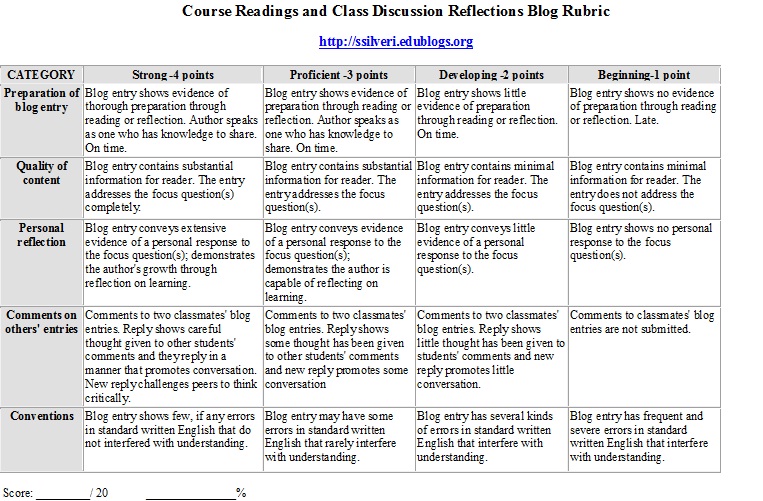
Archives
November 2026
Categories
All
|
 RSS Feed