Reading 4 Blog: When Regret Comes Too Late - Volume Three, pages 126–187 - Primary Blog Entry ONLY11/1/2026  By the end of Frankenstein, Victor, the creature, and Walton must confront what their deepest desires have cost and whether suffering has taught them to see themselves more clearly. Each attempts to explain his choices, yet the distance between his words and actions leaves troubling questions unanswered. Victor condemns the ambition that has devastated his life while still yearning for greatness; the creature mourns the lives he deliberately destroyed; and Walton turns toward home, carrying both the lives he has preserved and the dream he cannot bear to surrender.
How does Shelley use the ending of Frankenstein to develop a complex understanding of responsibility and to challenge the explanations people give for their own actions? Develop an interpretation that closely examines Shelley’s language and uses one annotation from pages 126–187 to deepen, complicate, or challenge your reading. Focus on one character or a comparison between two characters so that you can develop your ideas thoroughly. You might consider:
Choose one central idea. You do not need to answer every question. Explain what Shelley’s treatment of that idea suggests about human behavior beyond the novel. Treat the annotation as another voice in the conversation. You may agree with its interpretation, qualify it, or question it using evidence from the novel. Neither a character’s explanation nor an annotation should automatically become your conclusion. Primary Blog Post: 300-400 words, due Tuesday by 11:59 PM Your post should:
Distinguish between the novelist and the annotation’s contributor: “Shelley describes…” and “In annotation ___, [contributor’s name] argues…” Before drafting, consider: What did I believe about this character earlier? What does the ending confirm or complicate? What did the annotation help me notice? Use your assigned nom de plume and include your word count. Suggested Annotations: These annotations offer possible starting points. You are not restricted to this list. The questions below are reading guides rather than direct quotations from the notes.
Remember: The creature announces his intention to destroy himself, but the novel ends before readers can know whether he carries out that intention.
13 Comments
Marie de la Compacion
11/2/2026 02:50:38 pm
In Mary Shelley's Frankenstein, Shelley uses the ending of Frankenstein to develop a complex understanding of responsibility and to challenge explanations people give for their own actions to show how Victor and his creature were met in a hopeless darkness with each other that they so helpless tried to escape and how they two, are just alike. Shelley’s ending of Frankenstein is an amazing depiction of the one true thing Victor and the creature have tried to run from and not take responsibility for, each other. In annotation 19, on page 176 speaks deeply about how Victor has come to the realization that he too is feeling negative emotions and how people can dictate how one feels about themselves. Victor thinks this and draws an inference that the same way he is feeling at that current moment is the same way the creature has felt its whole life with feeling “ugly” and “unwanted” This part of the ending of the book shows how Victor and his constant running and disassociation from the creature has caught up to him and even though he wants nothing to do with the creature, he still has that constant connection to him, even in little things such has how he feels and how he feels others see him. Victor's very thing he was running from and taking lack of responsibility for is the very thing he has the most connection with. In the end of Frankenstein, when everyone happens to be dead and Victor, Walton, and the creature happen to be alone or concurrent with each other in different scenes we see how alike Victor and the creature are. As Victor tries to send the creature off, and exile him once again we see the sorrow and guilt and remorse the creature has once Victor kills himself. We see as the creature struggled its whole life with guilt and remorse of what it's done to other people, we see Victor having that same built up guilt which later leads to his own death. 11/3/2026 10:11:37 am
In the book Frankenstein by Mary Shelley, She uses the end of Frankenstein to develop a complex understanding of responsibility and to challenge the explanations people give for their own actions to show that Walton represents the concept of "a fork in the road", as he is forced to decide on whether to adopt Victors defiance or to accept a more painful, responsibility for the lives of other innocent people. Similarly, when the crew begs to return home if they break free, Victor delivers a speech, to keep their spirits up and stay focused on the path to glory: "Oh! be men or be more than men. ... Return as heroes who have fought and conquered"(Shelley 179). Which shows how Victor expects Waltons crew cto treat their lives as expendable "small prices to pay" for discovery, attempting to lead Walton down the path of Victor's unwavering defiance, unless Walton defies him and instead of staying in denial accepts humanity for who they are representing the "fork in the road". On top of that, Walton openly expresses how agonizing it felt for him to abandon his dream, demonstrating that accepting responsibility comes at a personal cost: "The die is cast; I have consented to return, if we are not destroyed. Thus are my hopes blasted cowardice and indecision; I come back ignorant and disappointed"(Shelley 180). By making the decision to turn the ship south, Walton breaks the cycle that destroyed Victor. While Victor dies, staying trapped in his defiance, Walton survives embracing a painful, and deeply human responsibility for the lives of others. Shelley's ending of Frankenstein did a great job at emphasizing the idea that in the pursuit of completing his goal Walton is only met with regret and sorrow as in pursuit of his goal he lost what he had once took so much pride in: his humanity. In annotation 23, page 180, Sean A. Hayes contrasts Walton's trajectory with Victors. He evaluates Waltons decision to abandon his pointless goal by turning the ship around shows his moral growth, as it addresses the feelings of regret, sorrow, and preserved humanity that came with sacrificing his dream. Whilst Victor never backed down from his goal, leading to his downfall by the hands of the being he despised the most in pursuit of glory. Overall, Shelley's writing and how she emphasizes the impact of Walton's choice over Victor's shows how Walton in the end chose to take in the responsibility of himself and his crew mates by turning the ship around and fleeing, whilst Victor never chose to take responsibility for the creature staying in denial and refusing to believe that he could've made such a vile monster ultimately leading to his death as in his stubborn refusal for responsibility he met his end at the hands of his greatest failure.
Dorothy Banks
11/3/2026 02:09:11 pm
Shelley uses Walton to show that sometimes people need to put others before their own ambitions. At the beginning of the book I saw Walton as very similar to Victor as both were ambitious and wanted to achieve something. However by the end of the book Walton shows that he can be a different person and puts others before his ambitions.
Jiang Hui
11/3/2026 05:53:17 pm
Shelley uses the ending of Frankenstein to develop the idea that accepting responsibility for one’s actions is vastly different and more profound than simply recognizing the consequences of them. Although Victor, in his last moments alive, eventually acknowledges the destruction his youthful ambition caused, his continued obsession with chasing the creature to the ends of the Earth suggests that this acknowledgement alone isn’t enough to inspire reflection or personal growth. The same surface-level acknowledgement of wrongdoing occurs in the mind of the creature as he forces humankind to shoulder the blame for his actions. Shelley uses these characters’ mindsets in their final moments to demonstrate that greater mankind will often hide behind veils of “reinvention” after being caught doing wrong, when usually, nothing more than a shallow recognition of wrongdoing has occurred.
Marie Rennotte
11/3/2026 05:56:22 pm
At the end of Frankenstein Mary Shelley shows that the comforting idea that human suffering or remorse can fully clear a person of their ambitions is false. Victor Frankenstein while dying on Walton’s ship says he is sorry for his search for knowledge but his last words show that Victor keeps a dangerous stubbornness to give up his pride. Of showing real responsibility Victor tells Walton’s crew to seek glory in their expedition saying, "Seek happiness in tranquility and avoid ambition, even if it be only the apparently innocent one of distinguishing yourself in science and the arts" (Shelley 180). Soon after Victor goes against his own warning and asks them to prove their courage and face danger for good reasons. Shelley uses this contradiction to show that people often hide their own ego behind moral duty giving big explanations to hide the damage their choices cause.
Marie Rennotte
11/3/2026 05:58:07 pm
Word Count: 327
Clara Willdenow
11/3/2026 06:57:54 pm
Shelley uses the ending of Frankenstein to develop a complex understanding of responsibility and to challenge the explanations people give for their own actions in order to show how self-awareness can cause change. In the end, both Victor and the creature come to the realization that they are at fault for their actions. Victor says to his father, “‘William, Justine, and Henry-they all died by my hands’” (Shelley 154). Before, Victor refused responsibility for the deaths caused by the creature, like when it came to Justine being framed for the murder of William, but now he is finally admitting to his wrongdoings. Although Victor doesn’t admit that he created the creature and abandoned it, making it the way it is, and is still acting only in his best interest, he showed that he still cares for others and feels guilty for the deaths. Similar to Victor, the creature is remorseful and acknowledges his wretched actions, saying to Walton, “‘I have murdered the lovely and the helpless; I have strangled the innocent as they slept, and grasped to death his throat who never injured me or any other living thing’” (Shelley 186). The creature wanted to inflict as much misery as possible on Victor in his desire for revenge, feeling as though his actions were justified due to the hardships he experienced. However, the creature realized that, in hopes of hurting Victor, he hurt people who had nothing to do with his bringing to life, and therefore he plans his own death. In Mike Stanford's annotation (pg. 166-167), he examines how the creature’s desire for vengeance leads him to kill Victor’s loved ones and how Victor seeks retribution, which ultimately fails, leading Victor to see how it feels when society fails him, just like how he and society failed the creature. Overall, this reveals how Victor and the creature are alike despite their different stories, as both are victims, but also the victimizers.
Huang Lu
11/3/2026 07:36:55 pm
Shelley utilizes the events at the end of the novel, to show that even in times of despair, people will continue to dodge responsibility for their actions using suffering to justify their wrongdoing.
Rukhmabhai
11/3/2026 09:56:59 pm
Shelley uses the ending of Frankenstein to display how much of humanity continues to blame others for their actions instead of taking ownership of their responsibilities and admitting their wrongdoings. Victor was the one who created the creature so he should have been accountable for the creature’s actions. Though Victor refused to accept ownership of the creature and abandoned it completely. With no sense of love and care from Victor, the creature learned the vengeful nature and behaviors of Victor and applied that into his life. It is true that the creature murdered multiple people but this was because of his learned hate from Victor. Even though Victor partially recognizes that his ambition had caused him to retreat into madness, he still chooses to blame the creature for everything. Instead of ownership, Victor spends his last days trying to get revenge. Victor tells Walton, “When actuated by selfish and vicious motives, I asked you to undertake my unfinished work; and I renew this request now, when I am only induced by reason and virtue” (Shelley 182). This quote shows that Victor believes he has reformed and changed his ways but in reality he is still immature and unwise, even on his death bed all he can think about is revenge instead of reflecting on his own actions and where he went wrong. The creature follows in the same footsteps of Victor. Even though the creature was wronged by Victor, he could have chosen to take a different path. But instead the creature says, “ My heart was fashioned to be susceptible of love and sympathy; and, when wrenched by misery to bice and hatred it did not endure the violence of the change without torture…” (Shelley 184). The creature himself explains that he had the capability to be soft hearted and follow the right path but Victor's malice against him caused him to turn nefarious. As annotation 26 by Joel Gereboff explains, the creature had the choice to listen to his conscience and do what was right but instead he chose to pursue violence (Shelley 184). The deflection of responsibility from both Victor and the creature displays that we blame others for our actions even though there is always a choice in the path you want to follow.
Amalia Heredia Livermore
11/3/2026 11:20:41 pm
In Mary Shelley’s ending of Frankenstein, Shelley reveals how refusing to acknowledge and take accountability for one's actions and responsibilities can turn suffering into destruction, while also challenging the assumption that every wrongful action receives a punishment. Through the creature and Victor, Shelley intensifies the distinction between villains and victims, which suggests that one can become completely engrossed by the very wrongdoing they use to justify their actions. Furthermore, Frankenstein's ambiguous ending raises the idea that sometimes an individual will never face the consequences of their actions. At the end of the novel, Victor, blinded by revenge, pursues the creature in a fit of rage for murdering his wife. Initially, Victor presented himself as a victim of the creature’s savagery; however, his desire to destroy the creature, his creation, gradually begins to make him resemble the very being he resents. In Note 14, Mike Stanford delves into how Victor's actions begin to mirror the creature through his pursuit of vengeance. Victor is so completely consumed by revenge that he is willing to sacrifice all his principles and the last sense of humanity he has left. Furthermore, this complicates the distinction between creator and creation because although Victor condemned the creature's actions and viewed them as destructive and monstrous, those very actions are the same ones he's beginning to adopt. Shelley suggests that when an individual allows hardships and suffering to dictate their actions, they become the resent. Additionally, in the Creature's final speech, he states, “I was benevolent and good; misery made me a fiend”(Shelley 80 ). He acknowledges his actions, and his words reveal how isolation and societal rejection contributed to his character and malicious actions. However, this does not erase the consequences of his actions and the lives he has taken. At the end of the novel, Victor also acknowledges the consequences his ambition caused, but at the expense of others' lives. Victor dies without repairing the destruction he causes, and the creature expresses his desire to destroy himself. However, Shelley never makes it explicit whether the creature follows through. Ultimately, we never know whether the creature truly faces the consequences of his actions, and Shelley's ambiguous ending suggests that justice isn't always served and that recognizing wrongdoing doesn't mean one will be held accountable. By refusing a definite resolution, Shelley forces readers to confront the uncomfortable truth that individuals sometimes leave behind irreversible damage without ever being punished.
Mary Ward
11/4/2026 10:13:53 am
In the novel Frankenstein, the author, Mary Shelley, uses the events at the end of her novel(in regards to Victor) to develop a complex understanding of responsibility and to challenge the explanations people give for their own actions. Towards the end of the novel, Victor Frankenstein encounters copious amounts of death due to his creation. Victor begins to feel the weight of his creation’s actions. He expresses: “But such is not my destiny; I must pursue and destroy the being to whom I gave existence; then my lot on earth will be fulfilled, and I may die” (Shelley 176). Victor embarks on a journey to destroy his creation, appearing as if it is his obligation to, rather than his choice to. However, despite Victor embarking on this journey, he is only taking “responsibility” now that the creature has seriously affected his family and the people he cares about. This illuminates the complexities of responsibility by showing that people only take responsibility for things once it has directly impacted themselves. Victor only cared about his creation after it caused harm to the people close to him, not when he had originally created it.
Madame Curie
11/11/2026 10:59:06 am
Shelley uses the ending of Frankenstein to develop a complex understanding of responsibility and challenges the explanations people give for their own actions by punishing both Victor and his creature, one with death and another with self-imposed isolation and assumed suicide. With Victor, he refuses to take responsibility for the creation of the creature, which led to multiple murders of people who were close to him and who trusted Victor. Even on his deathbed, Victor refuses to admit fault, claiming, "During these last days I have been occupied in examining my past conduct; nor do I find it blamable" (Shelley 178). Victor’s subconscious excuse was that he didn't know what he was getting himself into, as if he was a child playing with matches. When he tells Walton to "seek happiness in tranquility, and avoid ambition" (Shelley 179), he is still just blaming ambition instead of owning up to abandoning the creature.
Rita Lobato
11/12/2026 07:20:47 am
In *Frankenstein*, Mary Shelley uses Robert Walton’s final decisions to demonstrate that ambition can become dangerous when someone values personal success more than the safety of others\. Although Walton and Victor both pursue goals that they believe will make them successful, their responses to danger reveal an important difference\. Victor allows his ambition to consume his life, while Walton eventually recognizes that being responsible sometimes requires giving up something he deeply wants\. Leave a Reply. |
Blog Post Rubric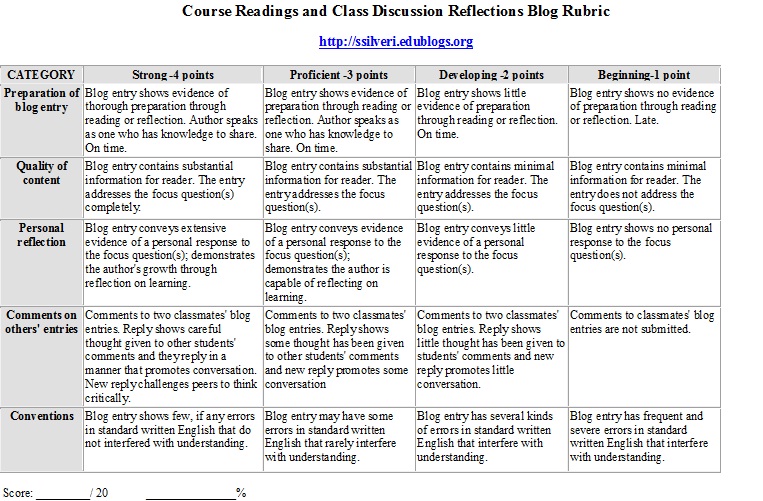
Archives
November 2026
Categories
All
|
 RSS Feed